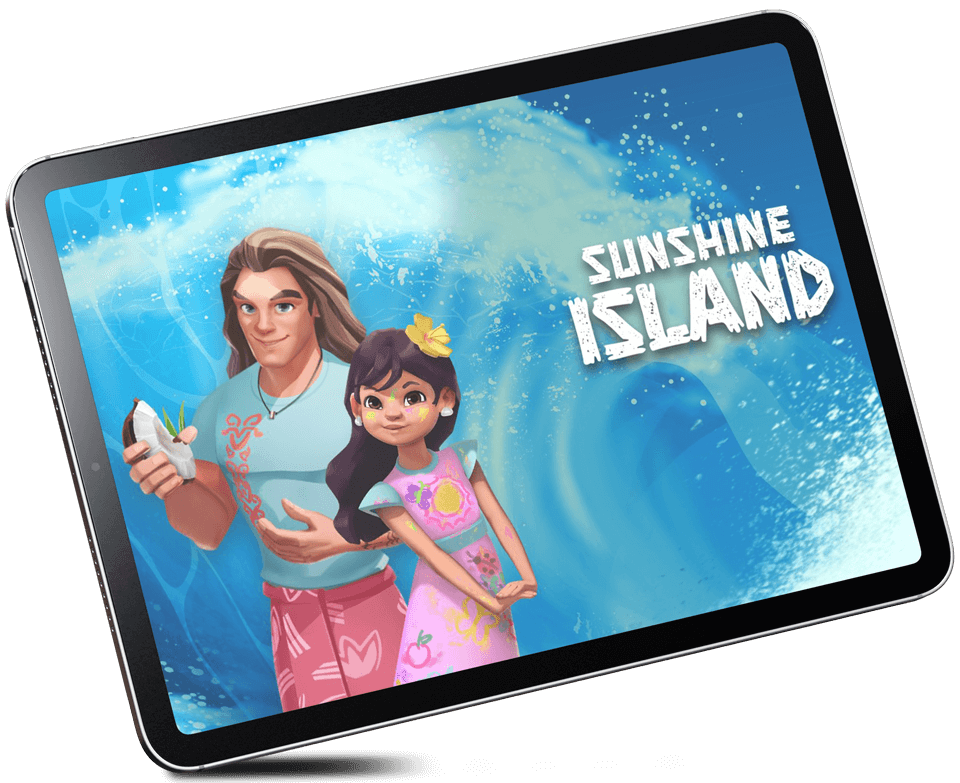
About Sunshine Island mobile game
Goodgame Studios is a leading developer and publisher of free-to-play games. The company tasked AppAgent with finding the right communication angle for Sunshine Island–a new farming game set in an exotic location.
The Brief
Create the very first batch of user acquisition (UA) assets for a new farming title. This encompasses UA creatives and fleshing out the app store content. The goal is to understand which elements of the game should be highlighted and built upon for marketing campaigns starting with the global launch.
✍️ AppAgent’s Best Practices
Fine-tune the campaign based on the product’s needs in each stage of the launch, from the initial introduction to post-launch communication. Static ads are great for uncovering quick insights that can be later expanded as more high-value assets.
The Solution
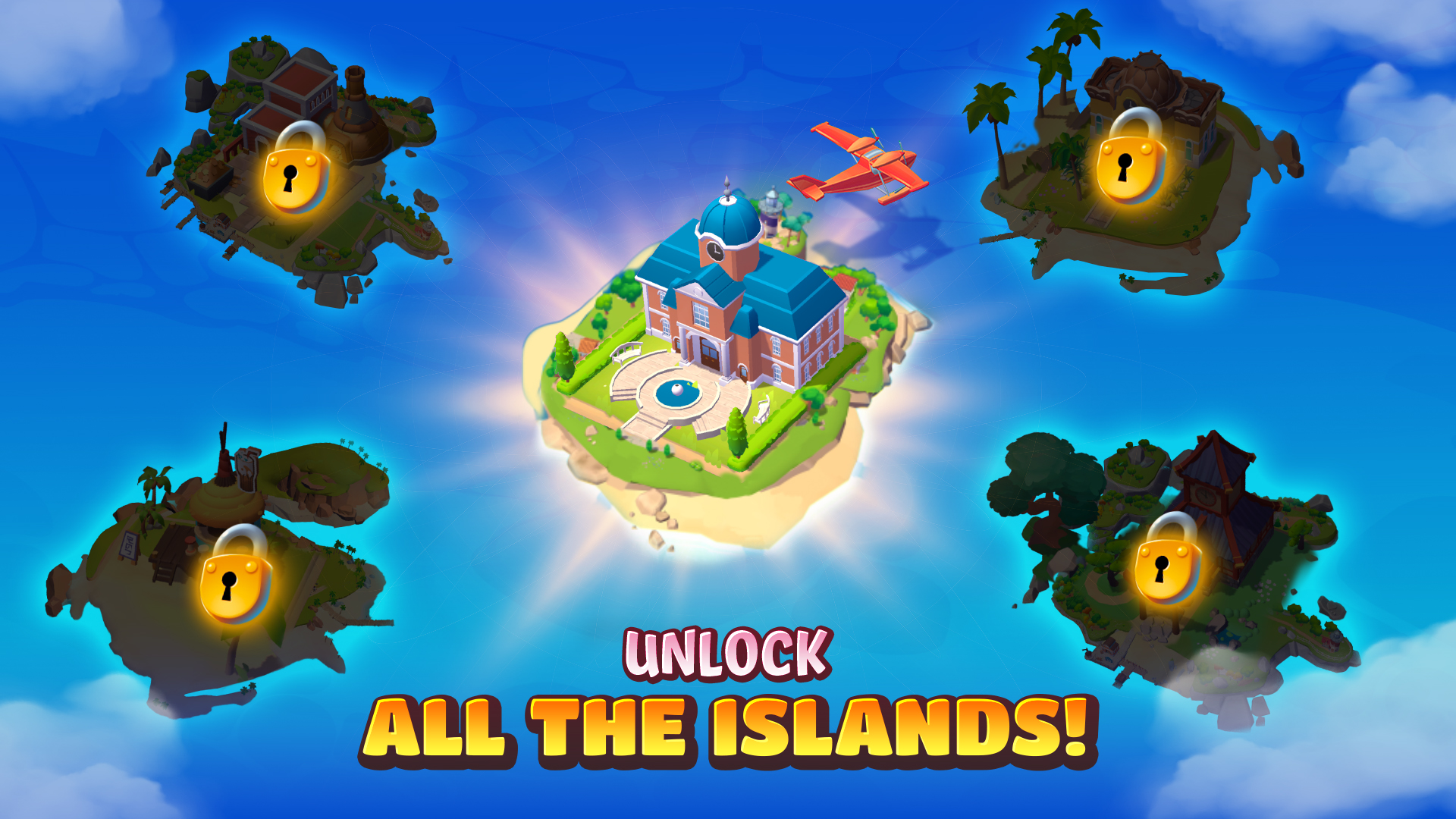
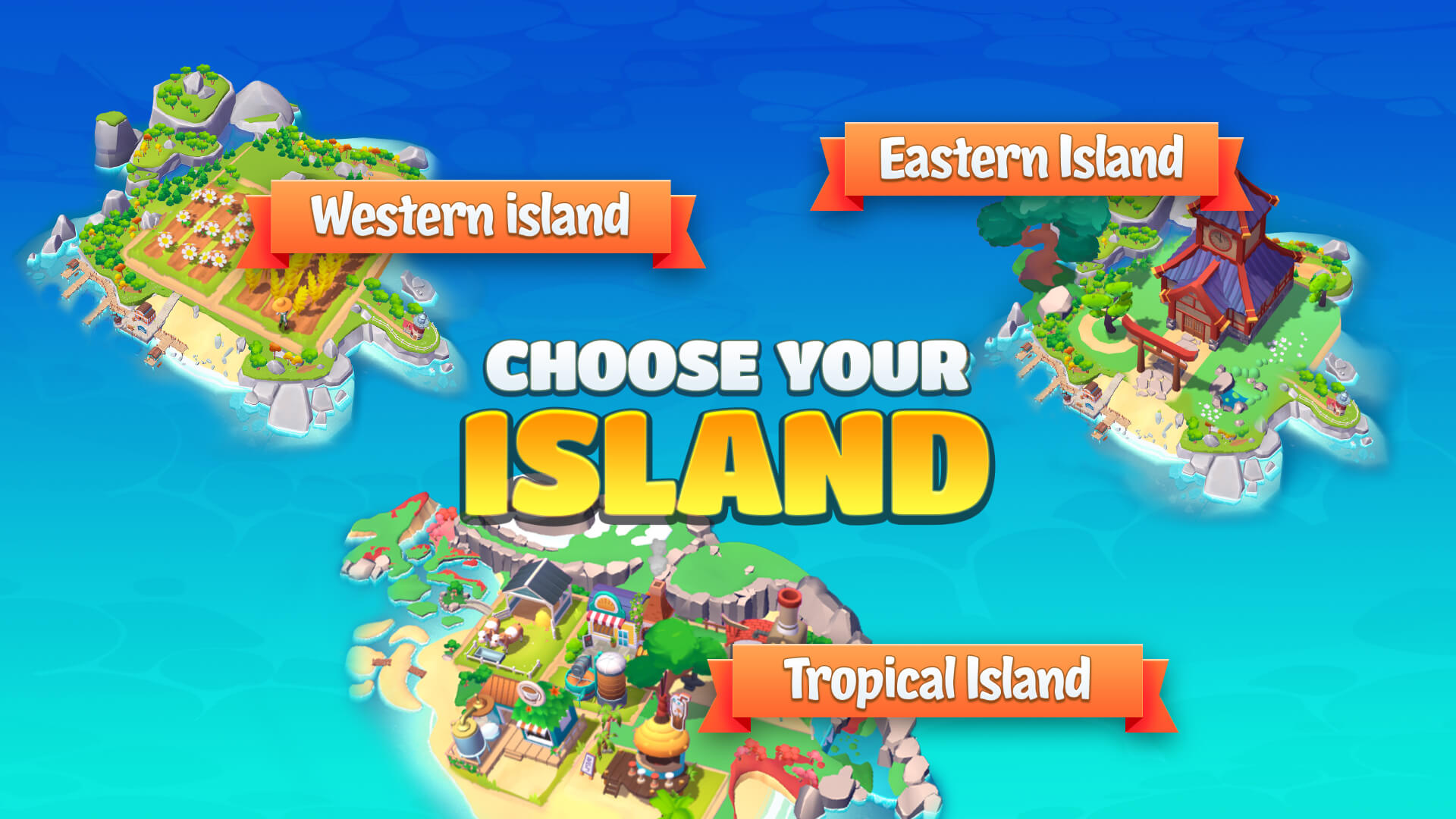
The team began by defining four main player motivators: mastery, management, expression, and social. For each motivator, AppAgent’s Creative Strategist developed three different creative directions, which were then shortlisted down to five that went into production. Directions included bartering & collaboration, village upgrades, and diversity & culture.
The creative production entailed both user acquisition and store assets to ensure a consistent user experience. This approach enabled us to track and evaluate the most effective user engagement processes, ultimately leading to insights on user retention and, further down the funnel, monetization metrics.

We primarily used static banners to uncover quick insights about what creative directions resonate best with the target audience at a low cost. With the insights we gained, we incorporated the successful creative approaches into video ads. These strategies allowed us to effectively blend narrative elements and game mechanics, which helped grab users’ attention and assess their readiness for the game. When tested, this combination yielded strong results at both the top and bottom of the funnel.
AppAgent’s Creative Team and the client’s user acquisition team gradually narrowed down the best-performing creative directions and ads. This iterative process continued until a well-defined positioning and communication strategy emerged, just in time for the game’s global launch.
AppAgent’s Conclusion
“Our creative strategy was rigorously tested and refined through a proprietary testing framework during the soft launch. In total, 28% of video ads and 43% of static assets achieved high performance. By the global launch, the team had a scalable, ROI positive strategy ready for execution.”
Frequently Asked Questions
What was AppAgent’s main objective for Sunshine Island?
Goodgame Studios asked AppAgent to create the very first batch of UA assets and App Store content for Sunshine Island, a new farming game. The goal wasn’t just to produce ads, but to find the right communication angle and market positioning before the global launch—understanding which parts of the game (e.g. trading, upgrading, social play) should lead the marketing.
How do you build a creative strategy from scratch when a game has no performance history?
For a new title, we start by defining core player motivators (like mastery, management, expression, and social). We test multiple creative directions with low-cost static banners first, identify what resonates, and then translate the winning hooks into scalable video ads.
How did you decide which themes and messages to explore in the creatives?
We started by defining four core player motivators: mastery, management, expression, and social. For each motivator, our Creative Strategist developed three creative directions, then narrowed these down to five concepts that went into production. Themes like bartering & collaboration, village upgrades, and diversity & culture helped us cover a wide emotional and gameplay spectrum without guessing.
Why did you use static banners first instead of going straight into video ads?
Static banners are a fast, low-cost way to test which ideas resonate with the target audience. For Sunshine Island, we used statics to quickly identify promising creative directions and hooks. Once we saw which themes performed, we translated the winning directions into video ads, investing more time and resources only into concepts that already showed potential.
How did the combination of static and video creatives impact performance?
This two-step approach—statics for quick insight, then videos for depth and scale—allowed us to blend narrative elements and clear game mechanics in the final video ads. When tested, this combination delivered strong results at both the top of the funnel (engagement, IPM) and bottom of the funnel (retention, monetization metrics), With 36% of creatives meeting or exceeding the strict performance thresholds set for the soft launch, a highly successful hit rate for a first creative batch on a brand new title.
What role did store assets play in this project?
Creative production included both user acquisition ads and store assets to keep the experience consistent from first impression to store page. By aligning ad concepts with icons, screenshots, and store messaging, we were able to better understand user engagement and how different creative directions influenced retention and monetization further down the funnel.
How was the creative strategy tested and refined before global launch?
During the soft launch, we ran Sunshine Island’s creatives through our internal testing framework. AppAgent’s Creative Team and Goodgame’s UA team worked together to gradually narrow down the best-performing directions and ads. In the end, 28% of video ads and 43% of static assets achieved high performance, and by global launch the team had a scalable, ROI-positive creative strategy ready to execute.
Why was soft-launch testing important before Sunshine Island’s global launch?
For a brand new title with no performance history, soft-launch testing was the only way to replace assumptions with real data. By testing statics first, the team identified which player motivators and messaging actually resonated – at low cost and fast turnaround. This approach allowed them to enter global launch with a validated creative strategy.
What can other studios launching a new farming or casual game learn from this case?
The Sunshine Island project shows the value of systematic creative exploration before a global launch. Defining player motivators, testing multiple directions with statics, then doubling down with video ads and aligned store assets is more effective than guessing. For new farming or casual titles, this approach helps you lock in positioning, messaging, and creative strategy early—so UA at launch isn’t an experiment, but a rollout of already validated ideas.