
About
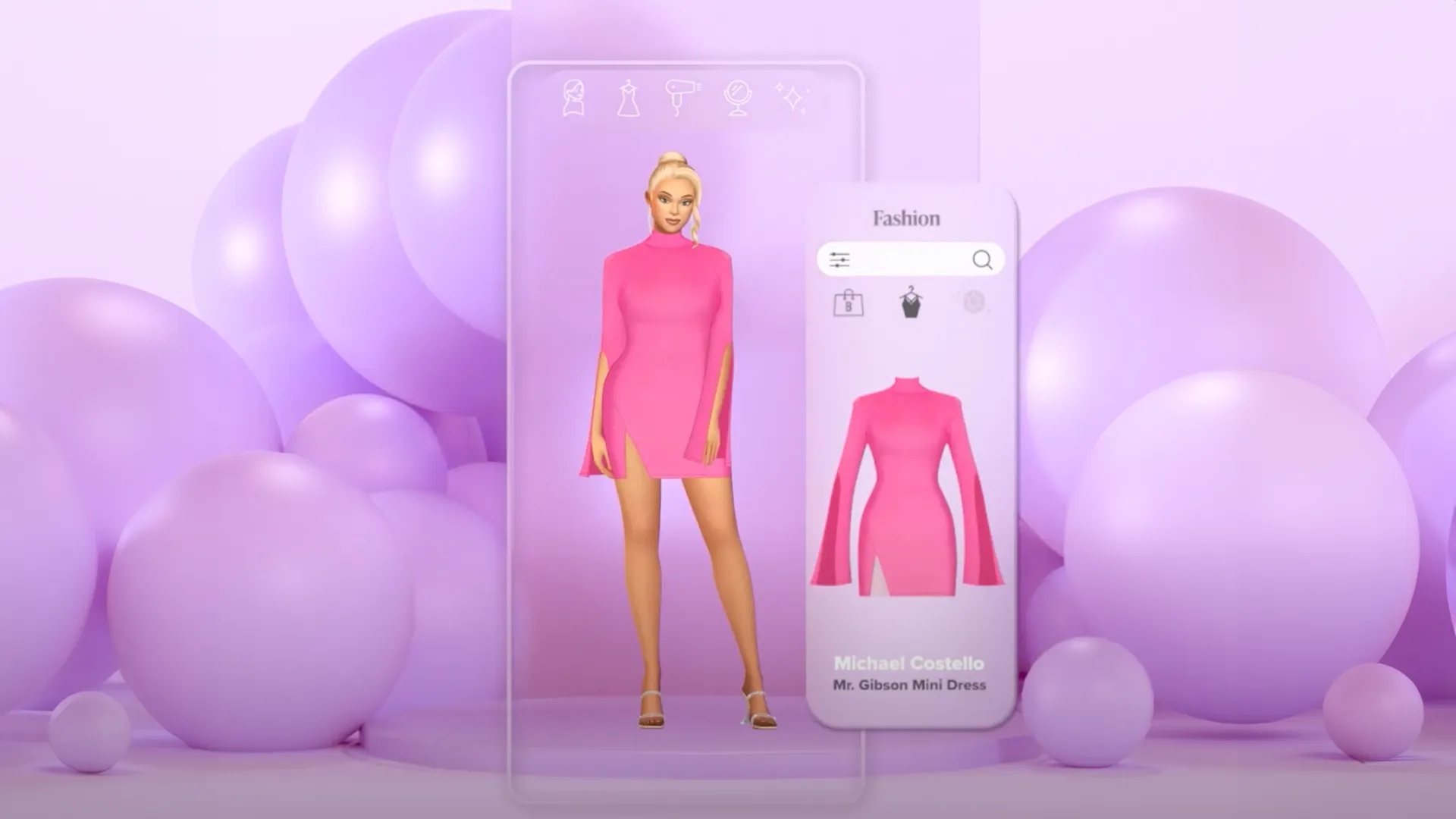
Muus Collective, the creators of BELLEMINT – a mobile fashion game where players style outfits, rate looks, and shop real-world brands like REVOLVE – partnered with AppAgent in 2023 for their global launch.
They were looking for a strategic partner to support their go-to-market efforts and lay the groundwork for long-term, profitable growth. Despite positive signals and two years of close collaboration, Muus Collective was ultimately unable to secure the funding needed to continue scaling the app.

The Brief
AppAgent’s mission was to orchestrate BELLEMINT’s global launch and scale the game by:
- Identifying the most effective marketing channels and optimization strategies for a fashion-forward audience.
- Developing a compelling creative strategy and producing a steady stream of high-performing ads.
- Building a profitable and scalable user acquisition engine focused on long-term retention and ROAS.
Process
To gather initial performance data, we began with a soft launch in proxy geos (Canada, Australia, and New Zealand) on Android.
We optimized for installs initially and then strategically shifted to down-funnel event optimization. By testing various in-app events, we pinpointed the one that offered the optimal balance of top- and bottom-funnel performance.
After validating the funnel structure on Android, we applied the same method on iOS – starting with installs to gather baseline data, then quickly pivoting to the optimized event we knew was working.
Once we had strong performance signals from proxy geos, we launched globally with the US as the main focus. By this point, we had already identified the best-performing creatives, the right in-app event to optimize for, and confirmed that iOS was the most profitable platform. This allowed us to skip costly testing in the main market and go straight into scaling, achieving 45% YoY increase in ROAS & improved retention.
Insights from Facebook placements guided our channel expansion. We used these learnings to strategically add TikTok and AppLovin, creating a multi-channel setup that allowed dynamic budget allocation to the strongest-performing platforms.
Creative testing was a core driver of campaign performance. We built a custom framework to align ad messaging with player motivators and match each with the most effective formats. This structured approach enabled fast iteration and clear learnings.
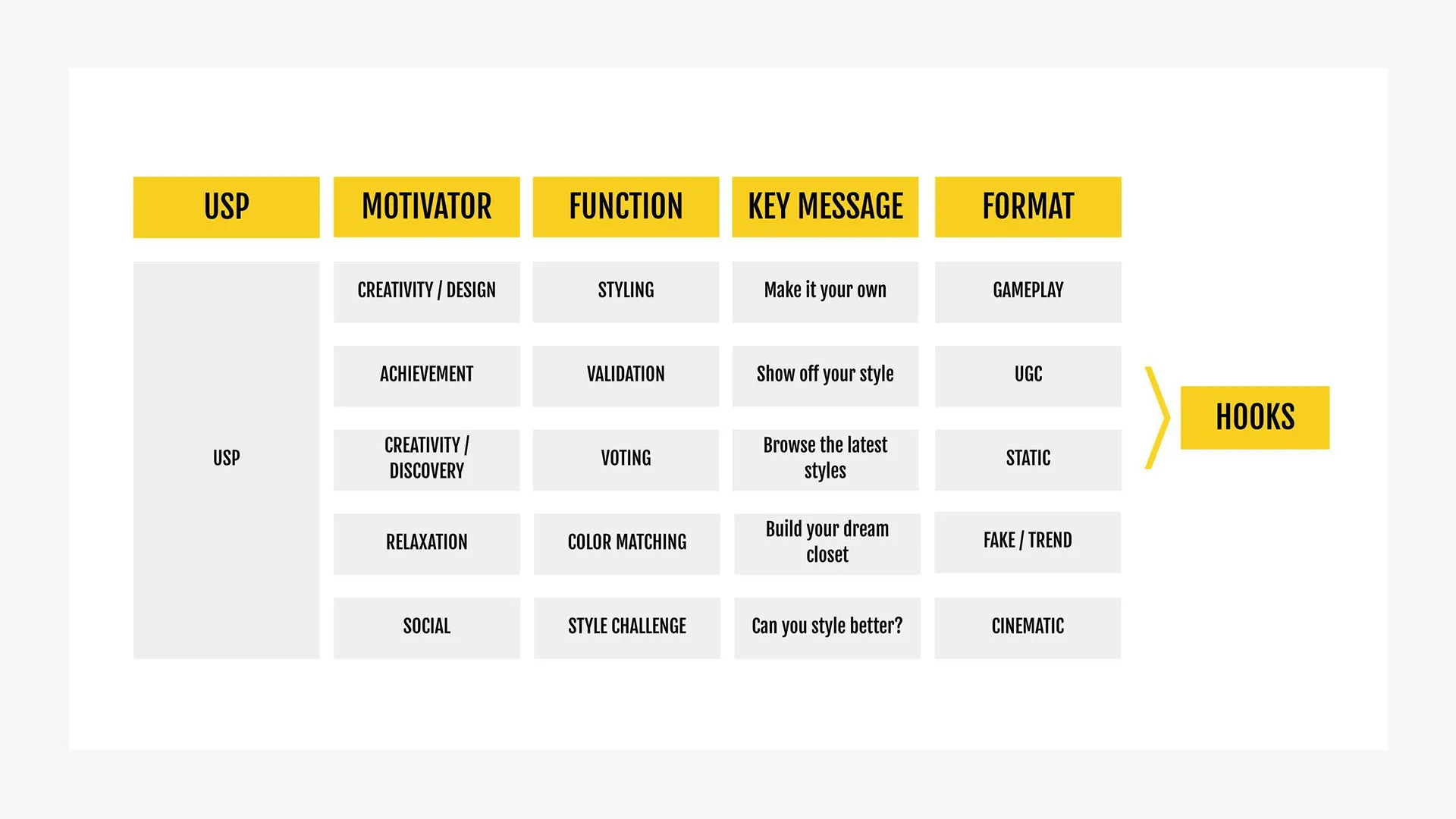
Using this framework, we evaluated over 75 unique concepts via monthly tests on Facebook. Narrative-driven ads, often featuring urgency, drama, and “failed missions,” consistently emerged as top performers. To maintain high CTRs without compromising retention, we carefully integrated “fake” game elements with actual gameplay.
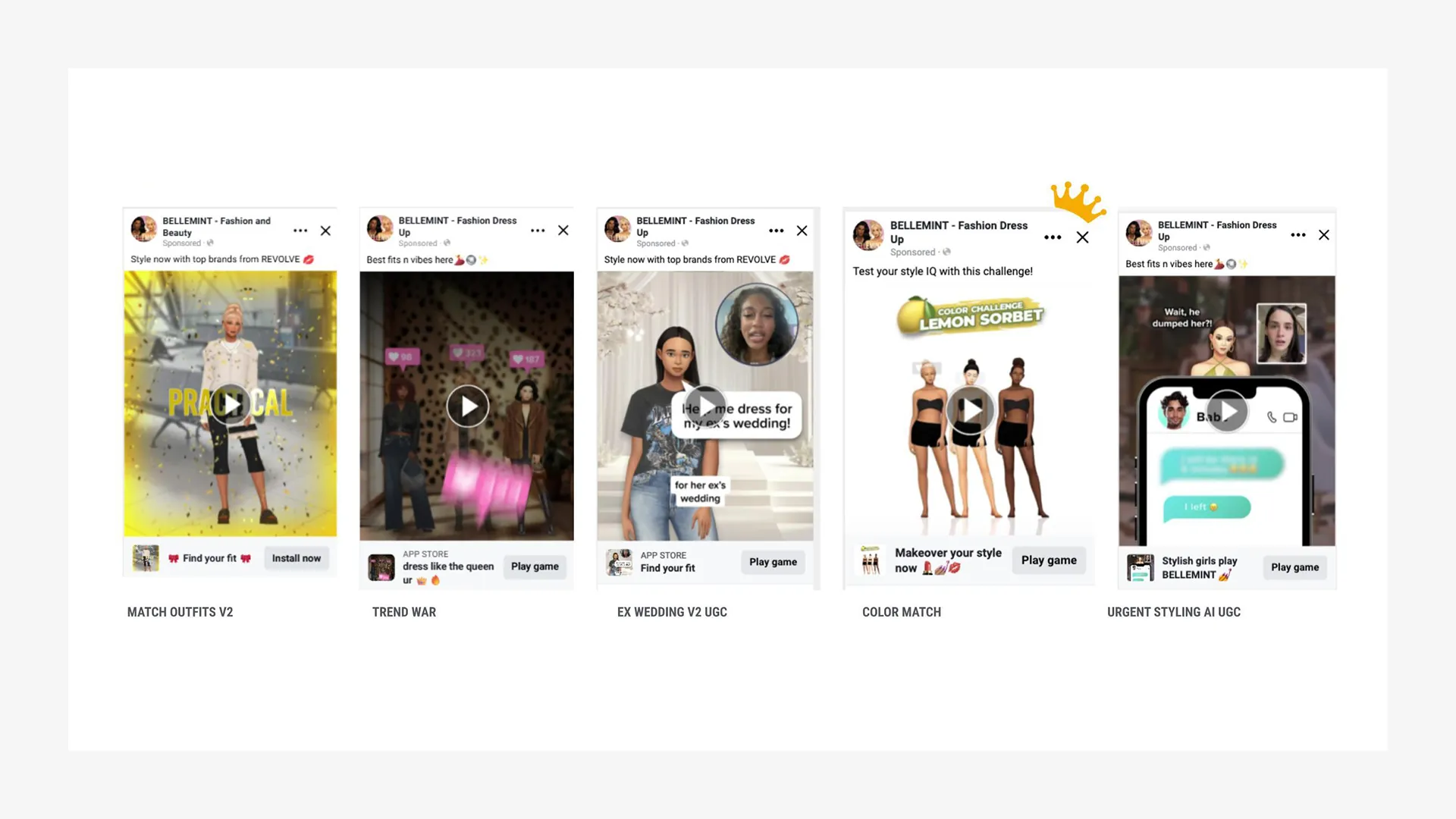
To avoid ad fatigue and keep top performers running longer, we refreshed high-performing assets by adding UGC-style layers. This gave us new variations without rebuilding from scratch and helped increase performance further.
The testing strategy resulted in 43.3% of creatives meeting the target CPI, while 1 in 4 exceeded 8 IPM in the US – confirming both efficiency and strong market fit.

Amanda Lulewicz VP of GrowthWhat I appreciated most about working with AppAgent is how proactive they were. They always came to the table with new ideas for both creative and optimization tests, and the impact of that thoughtfulness showed in our metrics.
✍️ AppAgent’s Best Practice
Thorough creative testing in proxy geos gave us clear winners, saving time and budget during the global launch.
By identifying the right creative directions, messages, formats, and hooks early on, we entered key markets with a proven creative formula and minimized risk.
AppAgent’s Conclusion
From proxy geo testing to global launch, every phase of this project was a joint effort. The creative wins and down-funnel gains made it a success in our eyes – despite the app not scaling further.
Frequently Asked Questions
What was AppAgent’s role in BELLEMINT’s global launch?
Muus Collective brought AppAgent in as a strategic partner for the global launch. Our role was to identify the right marketing channels and optimization strategies for a fashion-oriented audience, build a creative strategy with a consistent pipeline of high-performing ads, and develop a profitable, scalable UA engine focused on long-term retention and ROAS.
Why did you start with proxy geos instead of going straight to the US?
We began with a soft launch in proxy geos—Canada, Australia, and New Zealand on Android—to collect initial performance data at lower risk. First we optimized for installs, then shifted to down-funnel event optimization once we understood the conversion path. After validating the funnel on Android, we applied the same method on iOS. This meant that when we entered the US, we already knew the right in-app event, the best creatives, and the most profitable platform, allowing us to scale without expensive trial-and-error in the main market.
How did proxy geo testing reduce launch risk for BELLEMINT?
Launching directly in the US without validated data would have meant spending large budgets on unproven creatives, unknown conversion paths, and untested event optimization. By starting in Canada, Australia, and New Zealand, the team could identify the right in-app event, prove which creatives drove down-funnel performance, and validate the funnel on Android before replicating it on iOS – all at lower CPIs. By the time BELLEMINT entered the US, the discovery phase was already done.
How did you achieve a 45% YoY increase in ROAS and improve retention?
The ROAS uplift came from a combination of down-funnel optimization, proxy-geo testing, and multi-channel scaling. By the time we launched globally, we were optimizing toward the best-performing in-app event and using proven creatives. On top of that, channel expansion from Facebook into TikTok and AppLovin allowed us to allocate budget dynamically to the strongest performers, contributing to a 45% year-over-year increase in ROAS and a +29% uplift in Day 7 retention on paid channels.
What drove the 29% Day 7 retention uplift for Bellemint?
The +29% Day 7 retention uplift on paid channels was driven by carefully aligning the emotional promise in our narrative-driven ads with the actual in-app experience. By testing in proxy geos first, we could optimize toward the highest-quality down-funnel events before scaling.
What kind of creative strategy worked best for BELLEMINT’s audience?
We built a custom creative framework that connected player motivators with specific ad formats and messages. Through monthly tests of 75+ concepts on Facebook, we found that narrative-driven ads—often with urgency, drama, and “failed missions”—consistently performed best. To maintain high CTRs without hurting retention, we carefully combined “fake” game elements with real gameplay footage, keeping the promise of the ad aligned with the in-app experience.
How did you keep high-performing creatives from burning out?
To avoid ad fatigue, we didn’t just replace winners—we refreshed them. The team added UGC-style layers on top of high-performing assets, creating new variations without rebuilding from scratch. This extended the lifespan of the best concepts and helped lift performance even further, with 25% of creatives exceeding 8+ IPM in the US and 43.3% meeting target CPI.
Why did you expand beyond Facebook to TikTok and AppLovin?
Insights from Facebook placements gave us a clear view of which messages, hooks, and audiences were working. We then used these learnings to strategically add TikTok and AppLovin, building a multi-channel setup. This allowed us to shift budgets toward the channels and campaigns that delivered the strongest combination of ROAS, retention, and IPM, instead of being dependent on a single network.
If the performance was strong, why didn’t BELLEMINT continue to scale?
From a marketing and product perspective, the project was a success: we saw strong creative performance, improved down-funnel metrics, and higher ROAS and retention. However, Muus Collective ultimately couldn’t secure the funding needed to continue scaling the app, this was a business constraint rather than a performance issue. In AppAgent’s eyes, the launch and growth setup itself delivered on its goals.
What makes UA different for a fashion mobile game vs other genres?
Fashion game audiences respond heavily to narrative, emotion, and authentic styling. Success requires using UGC-style ad layers, dramatic storytelling hooks, and rigorously testing in proxy geos to validate down-funnel retention events before spending in key markets.
What can other fashion or lifestyle games learn from the BELLEMINT launch?
The BELLEMINT launch highlights the importance of validating the funnel and creatives in proxy geos, optimizing for the right down-funnel events, and building a structured creative testing framework before scaling in key markets. For fashion and lifestyle titles, pairing narrative-driven, emotionally engaging ads with disciplined channel and event optimization can create a launch strategy that is both high-performing and repeatable.