I have a confession to make: I’m a Senior Creative Strategist in Mobile Gaming, and I’m in a full-on love-hate relationship with AI.
Love, because as a non-native speaker, it lets me stop feeling ashamed about not mastering the dark arts of English syntax. (F*ck you, commas. Why can’t you just work the same way in every language??!??)

Hate, not because I’m afraid it will replace me, no. Mostly because everyone wildly misinterprets what it can and can’t do, and insists on using AI for the fun, creative parts of the job – the very things that make getting up in the morning bearable – instead of automating the boring, repetitive stuff it was actually born to handle.

So when I see yet another tool designed to generate ad concepts, my only question is: WHY?
I love coming up with ideas. It’s literally why I do this job. It tickles my brain in all the right ways, floods me with dopamine, and gives me that little proud-gremlin moment whenever I come up with something cool.
But I do use AI for a lot of other things. So, let’s take a look at my day and see where AI actually helps me cut corners without touching my holy cow: ideation.

Where I Actually Use AI?
1. Grammar checks (duh)
Every deck and every “super important” message to a client goes through ChatGPT.
Yes, I have a confirmed C2 in English, but that doesn’t magically turn me into a native speaker, especially without living in an English-speaking country for years. And as someone whose main strength is writing, I simply can’t let mistakes slip.
What I put into the prompt:
- British or American English
- ONLY grammar check. No rewriting, no fluff, no “let me zhuzh it up for you.”
After that:
- I proofread again in case it still sneaks in a few AI-marker words like “tapestry,” “noteworthy,” or “engaging.”
- I check whether it butchered the sentence structure, like chopping normal sentences into 1–2-word dramatic fragments, or adding those “it’s not just X… it’s Y” clichés.

Sometimes, I even just ask if a word is appropriate here or there, or if an article is required. But I always make sure to ask the LLM to provide sources for its answer, preferably Merriam-Webster Dictionary or the Oxford Dictionary.
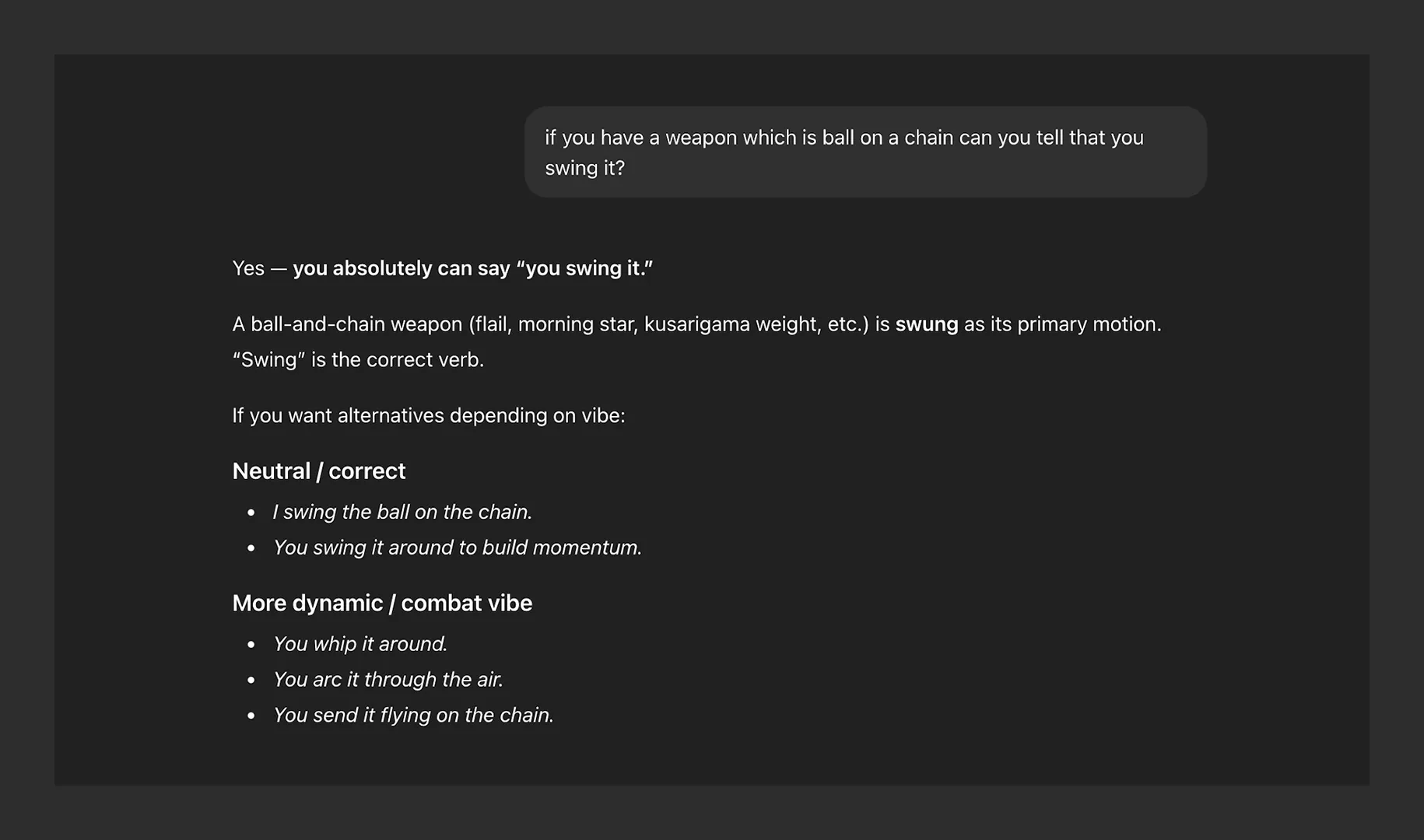
Can I just Google it? Sure. But it’s faster with AI. And no matter how sloppy I formulate my questions (grammar included), it will still understand me.
Sometimes I even slip words from my native language into an English sentence if it takes me more than a couple of seconds to remember the right word. It saves time and eases the mental load of constantly trying to be perfect in another language.
2. Searching for the Right Terminology
You can’t find a visual reference for your designer effectively if you don’t know what it’s called. That’s where AI comes in. I describe in my own words the visual I’m trying to find as a reference on YouTube, and it gives me the query that will lead me there.
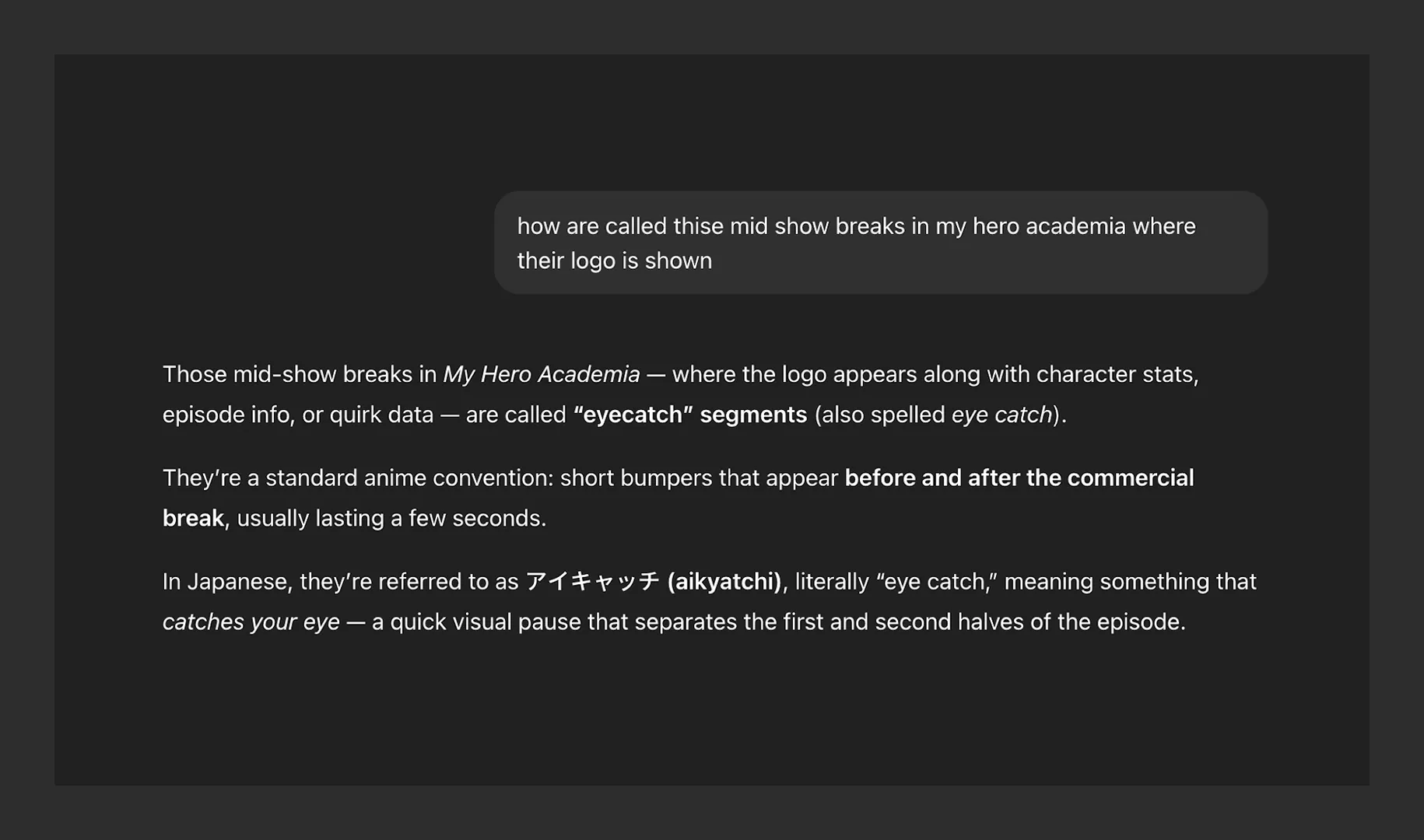
3. Organizing Chaotic Thoughts
My mind runs faster than my fingers can keep up. So when I’m trying to formulate something neatly into categories with bullet points, I sometimes scream out of pure frustration.
So what I do instead: I just dump everything I’m thinking about a topic into ChatGPT (with zero structure whatsoever), and ask it to do the one thing I absolutely hate doing: structuring it.
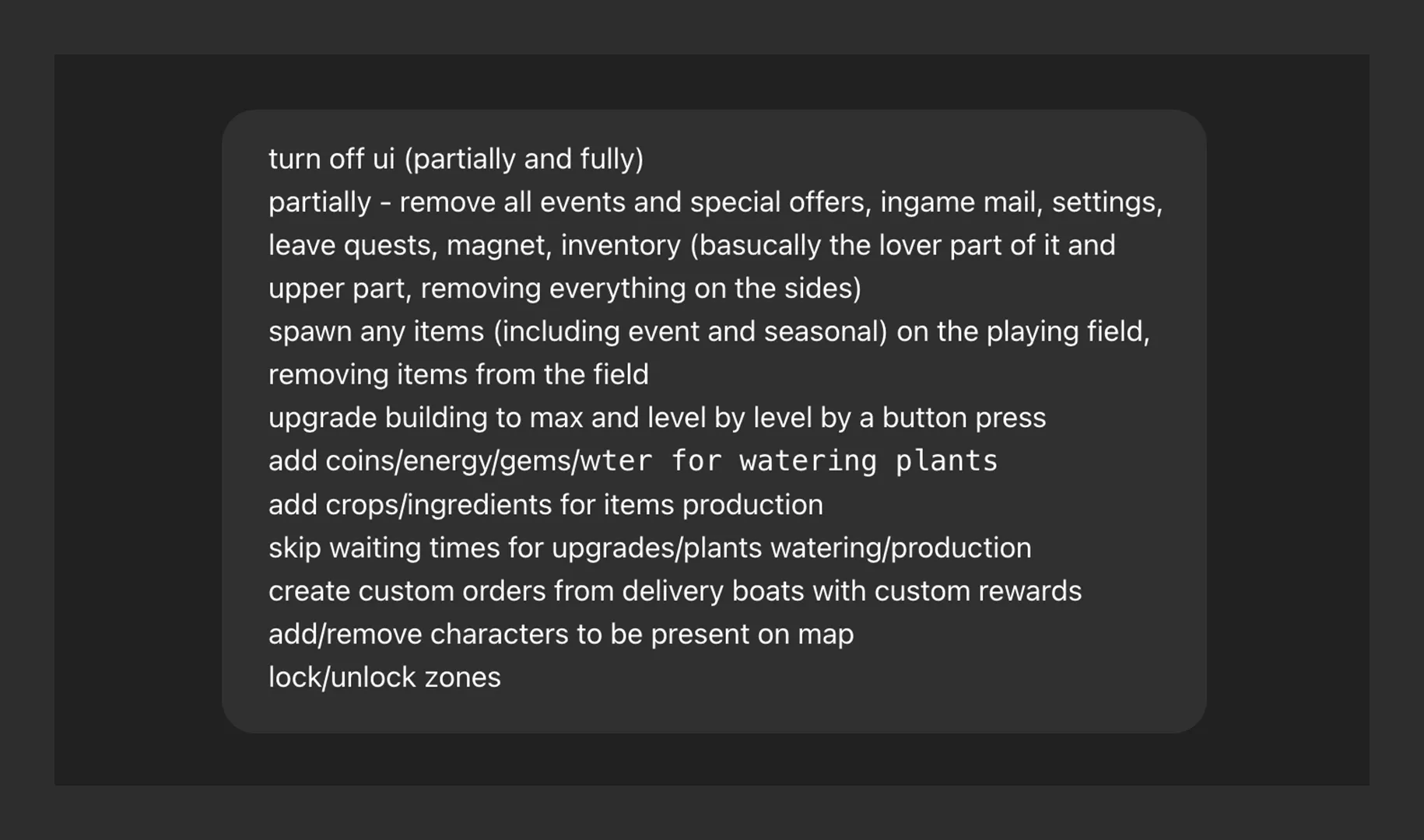
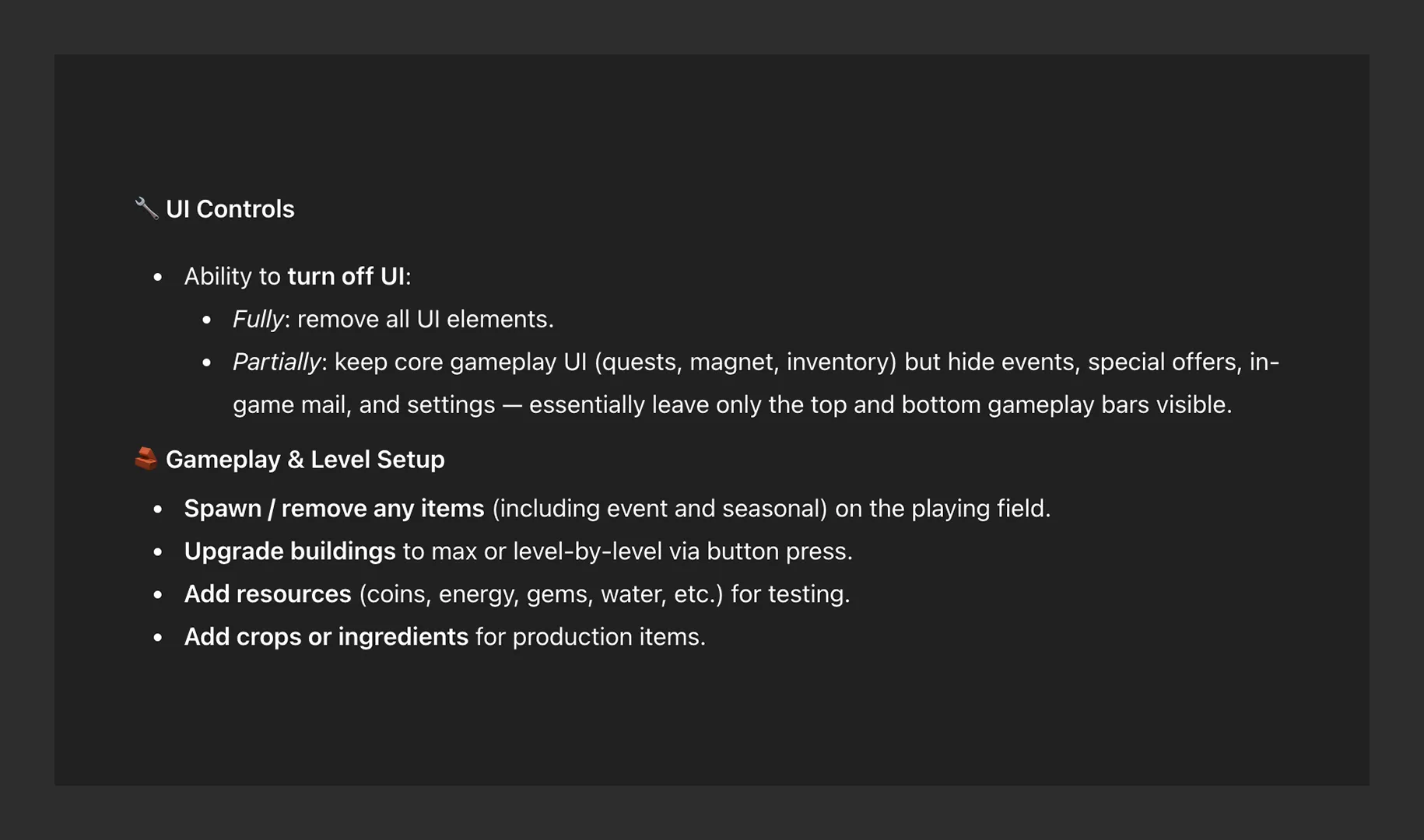
PROMPT 1: writing a slide about how rpg system is done in afk arena, help me formulatePROMPT 2: First impression that it gives - you put the phone away and the battle happens by itself, which is intended for an idle RPG BUT First the progression is very fast an easy, and player gets hooked on feeling overpowered. You don't need to timely upgrade your heroes, undrstand synergies and formations, you put them the battle and receive rewards, which count in millions, it gives feeling of being smart and rich early in game. The numbers in rewards (millions and billions of coins) are made this big intentionally, so it's harder to count and understand how many you really have applying to what you can but with them Then at one moment you stumble and understand that the progression stopped and you are not winning anymore. You want to regain the sense of control you once had, so you start investigating into the game more. And what you find is that there are severals 'battlefields' except for the main campaign where you can obtain resources to upgrade heroes + several events, including mini-games, match-3 and vampire survivals like. Of course, you can wait while the 'idle' battle will accumulate resources (it doesn't need winning and happens automatically at all times), but it is slow. The ways of obtaining resources are semi-hidden. Some of them are explicitly highlighted during the onboarding, and some you stumble upon yourself. This 'scavenger' hunt helps you regain some of the sense of lost control. Hpwever it's not the same as it was, it takes time and forces, and waiting and frustration, and that's when player monetizes. For hero summonning, same principle, you don't summon them wit one token type. You have several and 'hunt on different quests and levels you still can complete with your heroes to obtain, and possible summon better heroes or get resources to upgrade current ones. Interesting - you can upgrade your hero not only with copies of the same hero of the same level of ascenscion, but also with heroes of the same faction with same level of ascension which makes you make choices. Also interesting - resonating crystal mechanic. If you upgrade 5 heroes put there to a certain level - all your roster reaches this level. It doesn't mean too much in terms of team formation, because you will have more or less 5-7 heroes of bigger ascension, and all else lower, but it makes more clear who you upgrade. Example. You have 5 120 lvl heroes. Your whole roster is now 120 lvl too. You upgrade 1 using a very rare and hard to obtain resource. Now you have 1 hero 130 lvl, and 4 120lvI, your roster is still 120lvl, because you need to have all 5 upgraded to 130, to upgrade all roster to 130. It's still hard, but now as a player you have focus to upgrade heroes from the main 5 one by one. And even 1 hero from main roster significant upgrade leads to progression in all of the battlefield, so now a bit more of the world opens, you have once again what to do in the game, until you stumble upon next power cap which will resolve with next hero from the roster upgrade. What else is notable about summoning - it's the beautiful animations and suspense. They are long enough too enjoy and short enough to don't annoy. When you summon 10 at once, you see all 10 of hero cards at the same time. "big' animation of hero summoning plays only if it's the first time of seeing this hero. Option available - you can automatically 'retire common heroes (they are useless and don't even have their story), and get a bit of resources which after some time will let you summon other hero: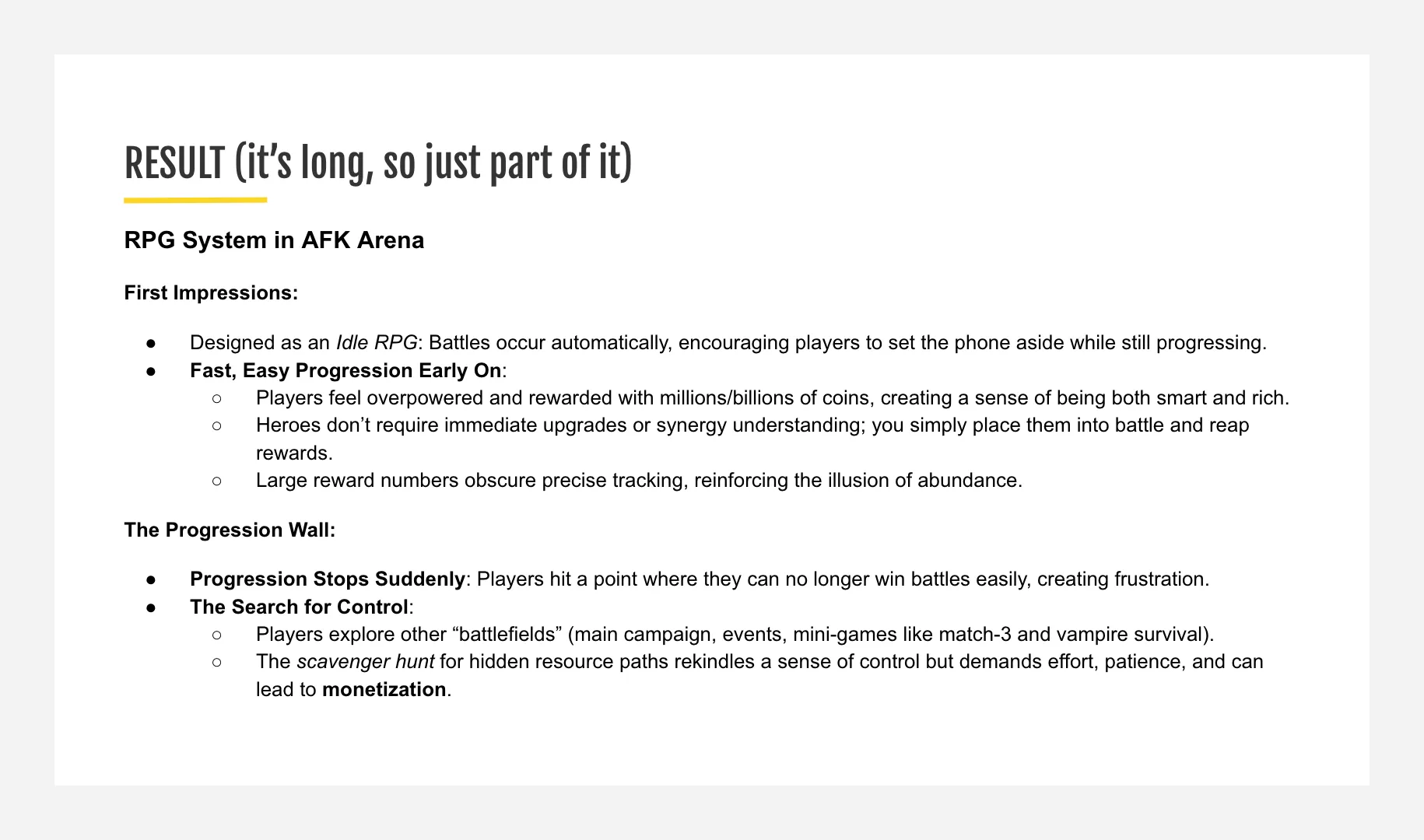
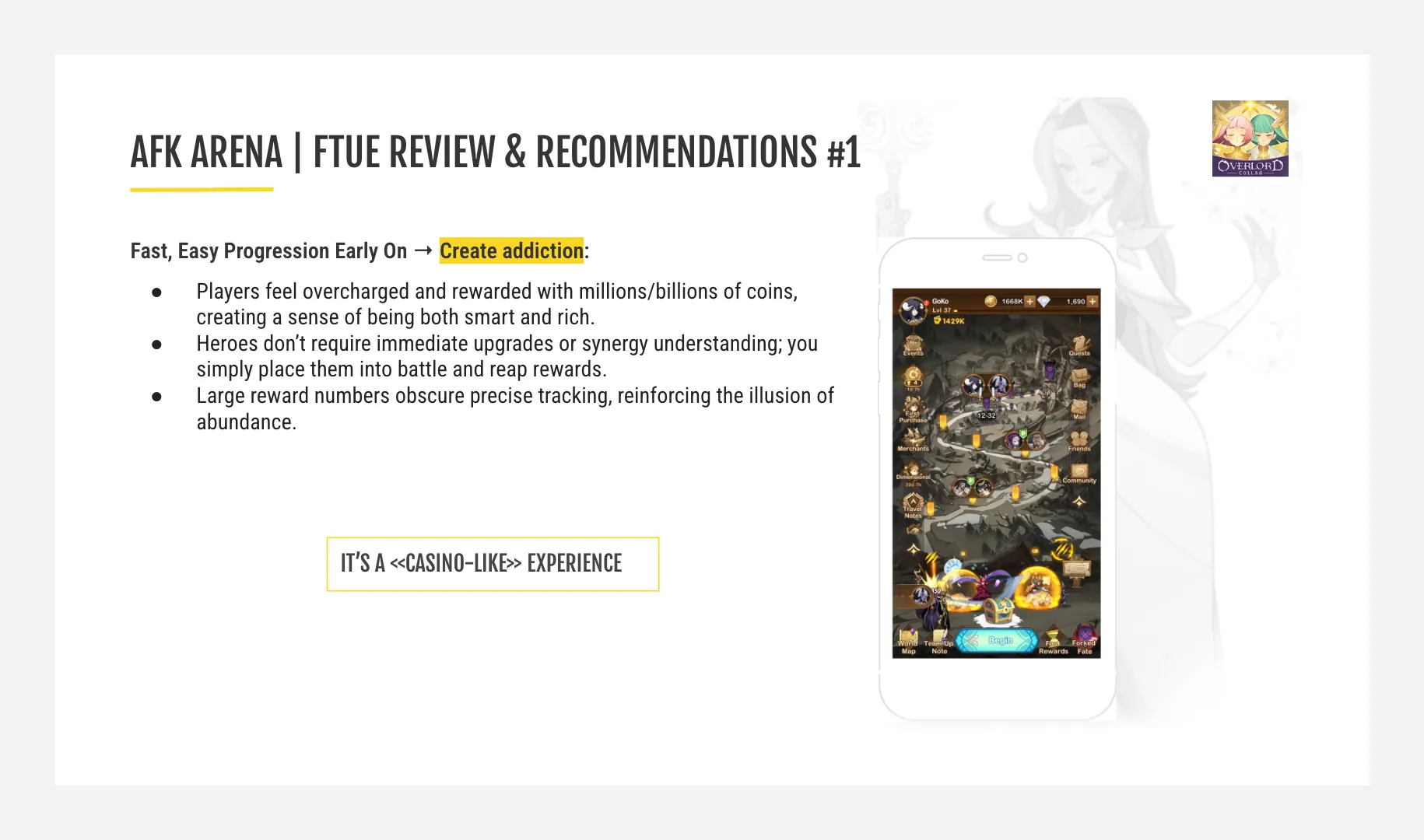
It does sometimes (okay, quite often) mess up which bullet point belongs to which category, but it’s so much easier to work from there and move things around once everything’s organized in a way you can actually see. And hey, it’s always easier to critique someone else’s text organization than your own!
Yes, I did the research myself (and ended up in the top guild of the server, lol). Could I ask AI to do that? Sure. I just don’t want to. I like thinking, and I get insane amounts of dopamine when, during that thinking process, I stumble upon a cool insight. So I do the fun things, and AI does the boring things. Same for concepts, by the way.
4. Structuring Concepts
I learned that some writers put their texts into a different-looking interface to spot inconsistencies and mistakes more easily, because it gives them a fresh perspective on their own writing. I use GPT in a similar way, except it also adds formatting to my plain text, saving me time.
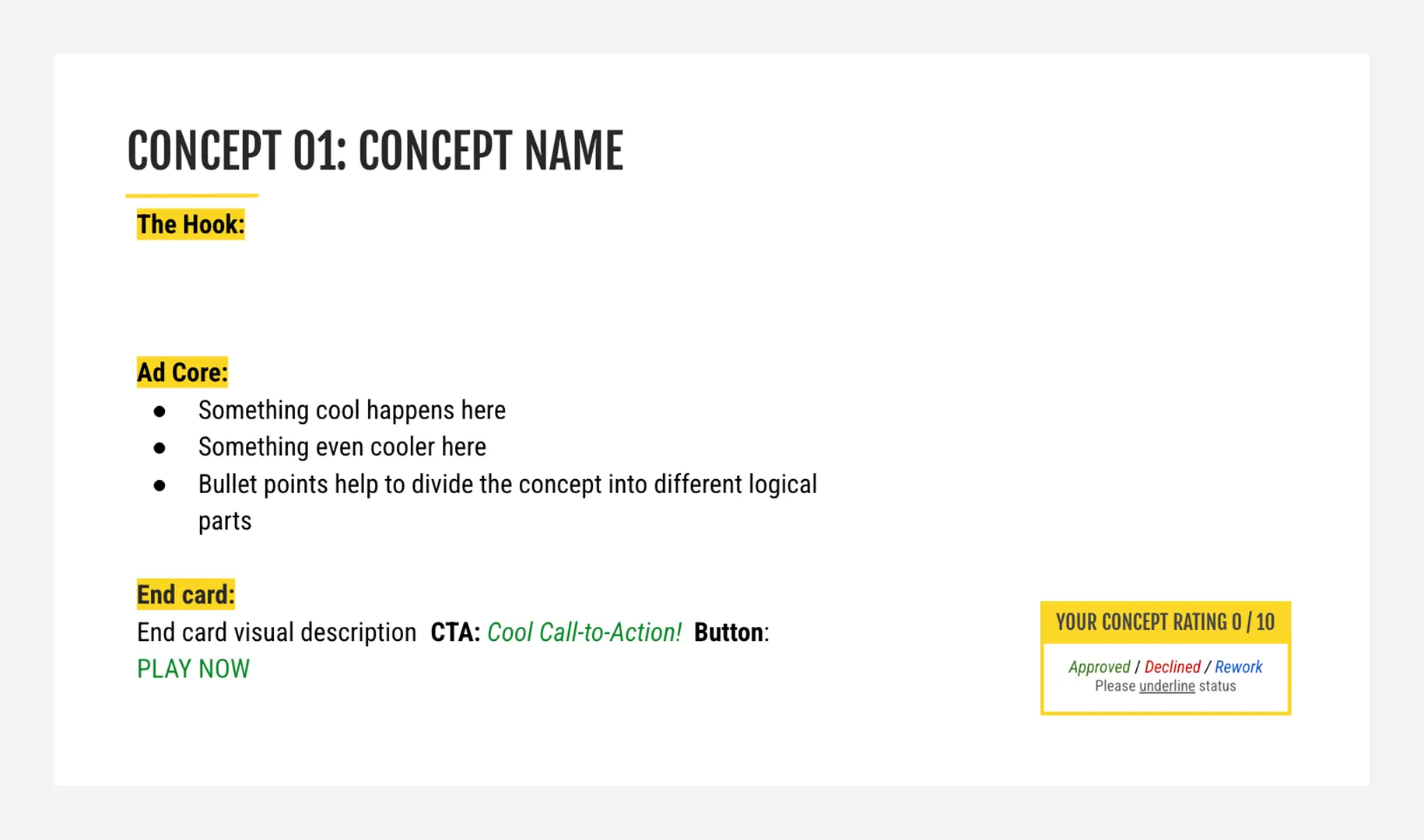
First, I showed it how we structure concepts. After a few rounds of back-and-forth to correct the structure and establish rules – length, no emojis, no rewriting my sentences – we got to the point where, thanks to the built-in memory function, my entire prompt can now just be: ‘Help me write a concept for X in the format hook – ad core – end card.
And I get back my concept; same ideas, but with clean grammar and solid structure.
5. Talking to a Video
Good industry videos are often around two hours long. And it’s insane to remember everything that was said there, especially after some time.
So what if you want to recall the key insights from a video without watching it again?
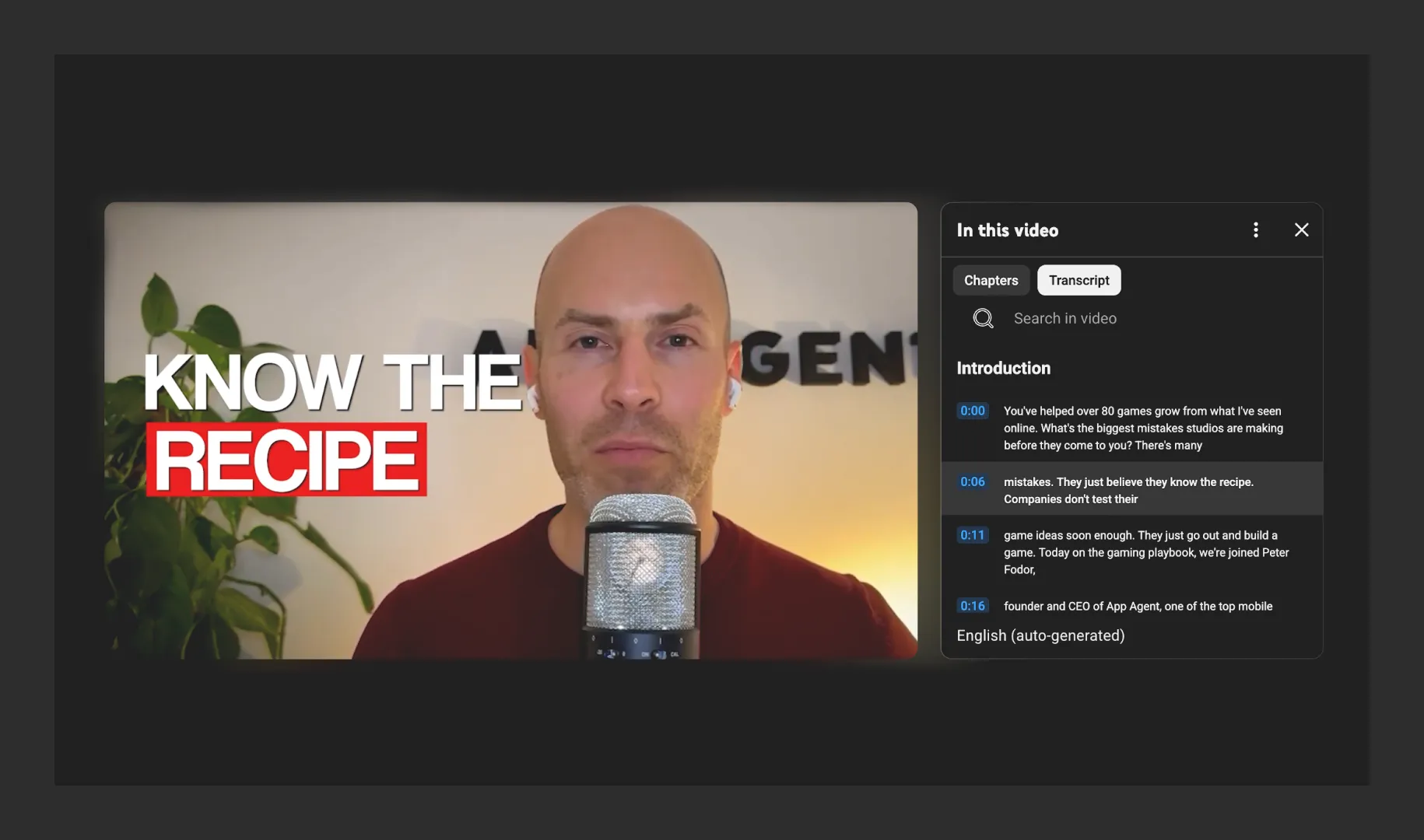
Just copy the video’s transcription, feed it into the AI of your choice, and start asking questions about the content. You can ask it to summarize, point out exactly when a topic was discussed, and then jump to the moment you’re interested in. It’s also perfect for grabbing direct quotes without retyping them manually.
Sometimes I also help out our New Business team with content (hi, Alara!). So if it’s about repurposing previously made materials (like videos) into other content formats, you can give the transcript to AI, define the format you want, and work from there.
You can even combine multiple sources like video transcripts, audio transcripts, and blog posts into one mash-up. And then, of course, rigorously edit before posting. Always.
6. Sentiment analysis
Here’s where the advanced stuff starts. I used to go through countless Reddit threads and tapestries (yes, that word was intentional) of YouTube, TikTok, and Instagram comments. After feeling my eyesight deteriorating and my IQ dropping, I finally approached our AI Creative Technologist (yes, you read that correctly) to help me save my sanity.
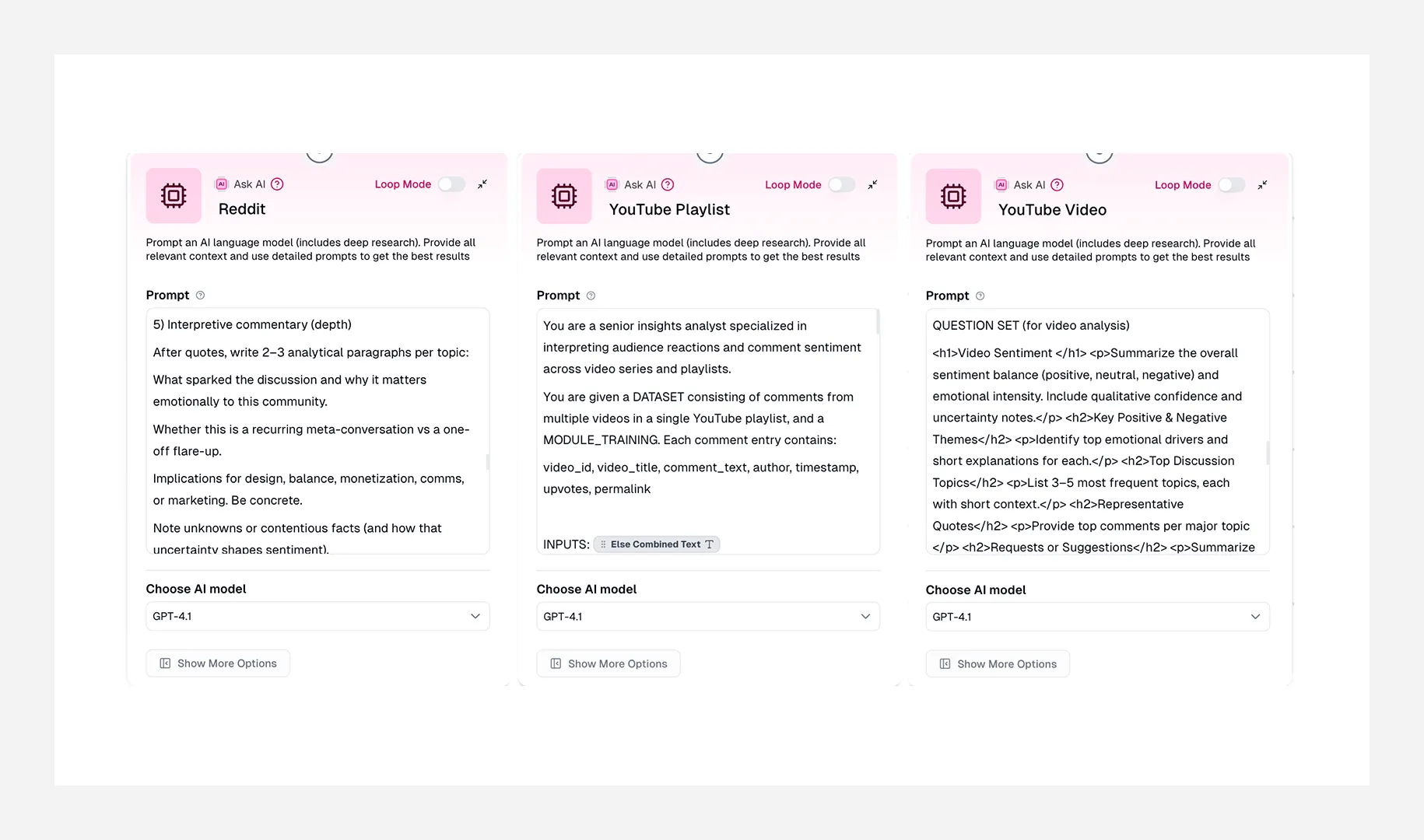
With my prompting, he developed our internal sentiment-analysis tool. It extracts up to 200 of the most-liked comments from YouTube videos and about 100 from top subreddit posts, then searches for specific patterns. Here’s what the tool pulls out:
- Major topics (coherent themes): what the buzz is really about and what people keep discussing.
- Dominant emotional tones per topic: anger, hype, confusion, humor, nostalgia, relief, betrayal, etc.
- Competing sub-narratives: defenders vs. critics, and whether the thread is polarized or leaning toward consensus.
- Qualitative ‘vibes ratio’: e.g., ‘mostly negative with pockets of optimism.’
Each major topic is supported by representative quotes filtered to remove bots, automod, and stickied announcements. On Reddit, we prefer high-karma users to reduce noise.
And here’s a sneak peek at the monster of a prompt living inside that tool:
Here’s an example for Fortnite:
Cross-Topic Insights
Design Decisions as Emotional Lightning Rods
Balance changes (even seemingly “routine” fixes or rebalances) are received with deep emotion -especially when the player base perceives them as removing fun rather than rewarding investment. PvE is expected to be fun-forward, not strictly balanced.
Communication and Trust Deficit
Confusion, misinformation, and persistent complaints stem less from the content of updates than from perceived absence of communication. The community’s default setting is now skepticism (“What’s the catch?”), underscoring low institutional trust.
Social Systems and the Spirit of Co-op
Removal of sharing/trading, whatever its technical merits, is widely felt as a symbolic loss-the fading of an era of generosity, gifting, and co-op culture. Attempts to “fix” the economy have social and cultural costs.
Humor and Meme Culture as Coping Mechanism
Self-aware jokes, meta-memes, and historical references help diffuse frustration and rebuild communal identity, especially in the absence of strong developer engagement.
Is it perfect? Of course not.
Does it give me guidance on what to look for instead of wandering through thousands of comments? Yes. And that’s exactly what I needed. (Thanks, Sachin!)
7. Competitor Analysis
And here’s where the advanced stuff continues. Sentiment analysis is only one part of the “AppAgent Optimus” tool we ended up developing internally to help tackle the most time-consuming (and frankly, the most frustrating) parts of creative work.
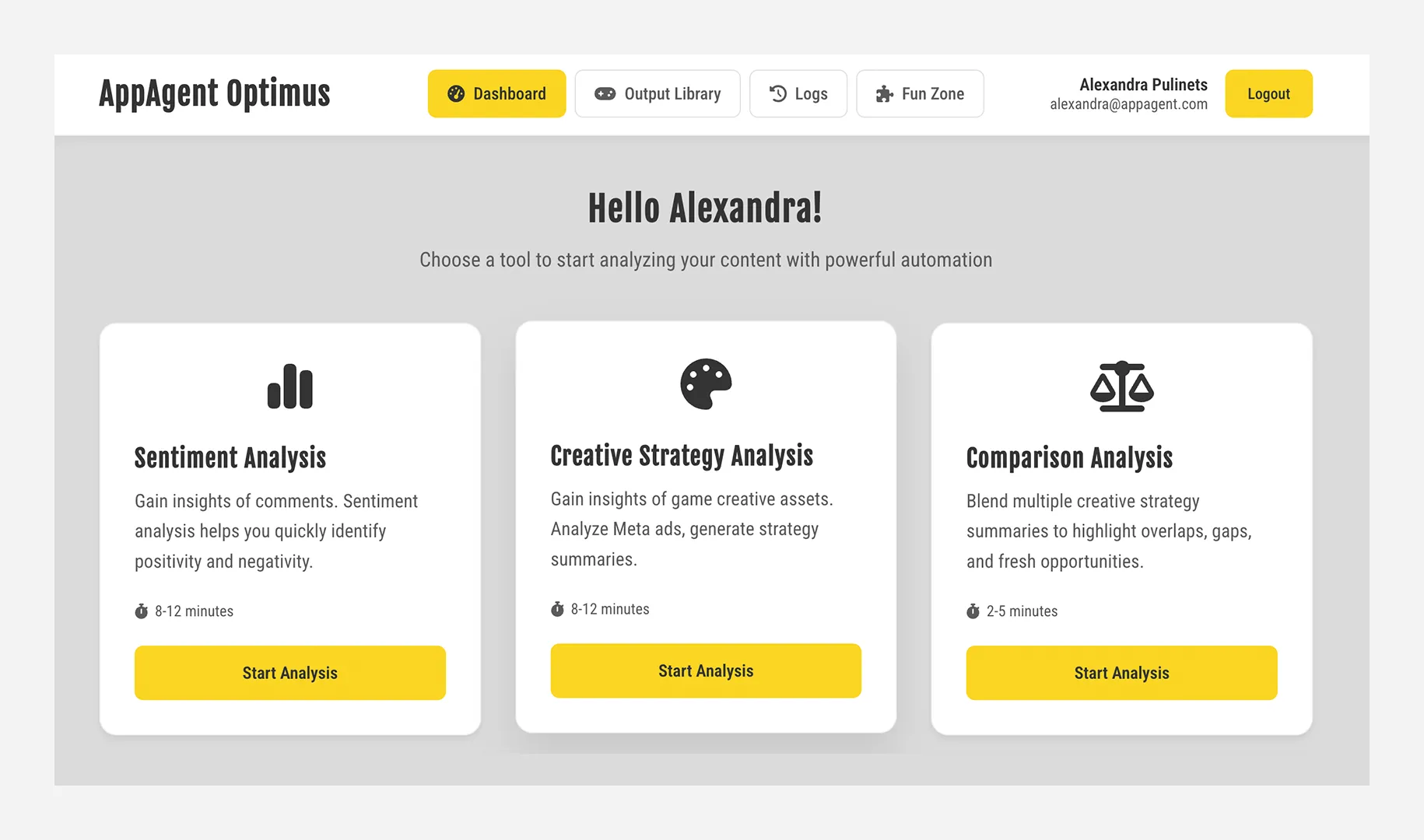
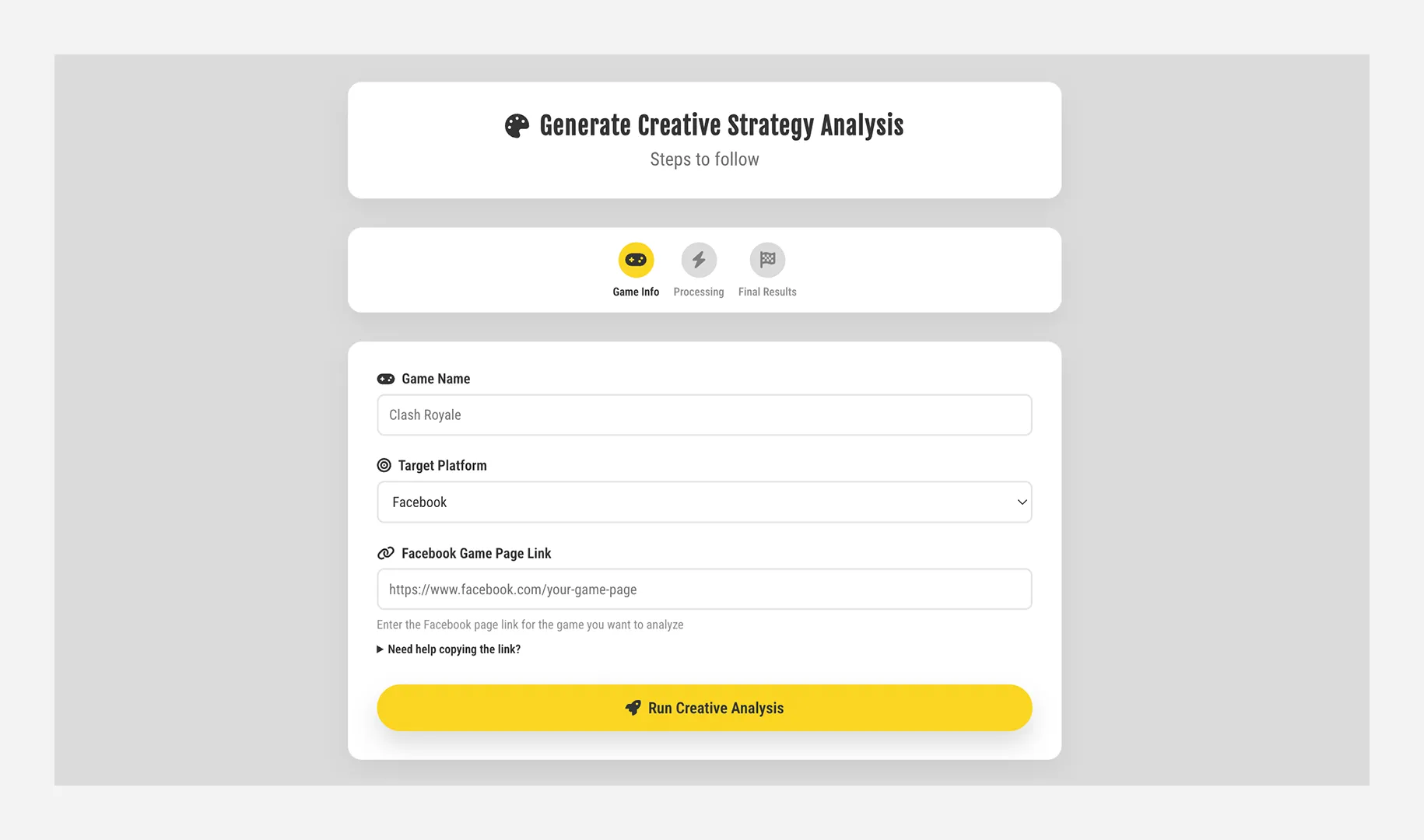
Imagine you have 20 competitors to analyze, each with 50 ads. Imagined? Great, now imagine doing that every week. That’s one of my regular tasks. And before you actually watch these ads with your own eyes, you can’t even tell whether a competitor is worth reviewing in the first place.
That’s why we decided to add a creative strategy analysis component to our setup.
What it does:
- Scrapes ads from the Meta Ad Library
- Filters out duplicates
- Sends them to Gemini for initial sorting
- Provides ChatGPT (armed with our prompts and context base) with detailed video scripts to analyze and compare
- Gives you back a structured four-quadrant system showing what the competitor’s current creative strategy is based on — according to AI’s interpretation
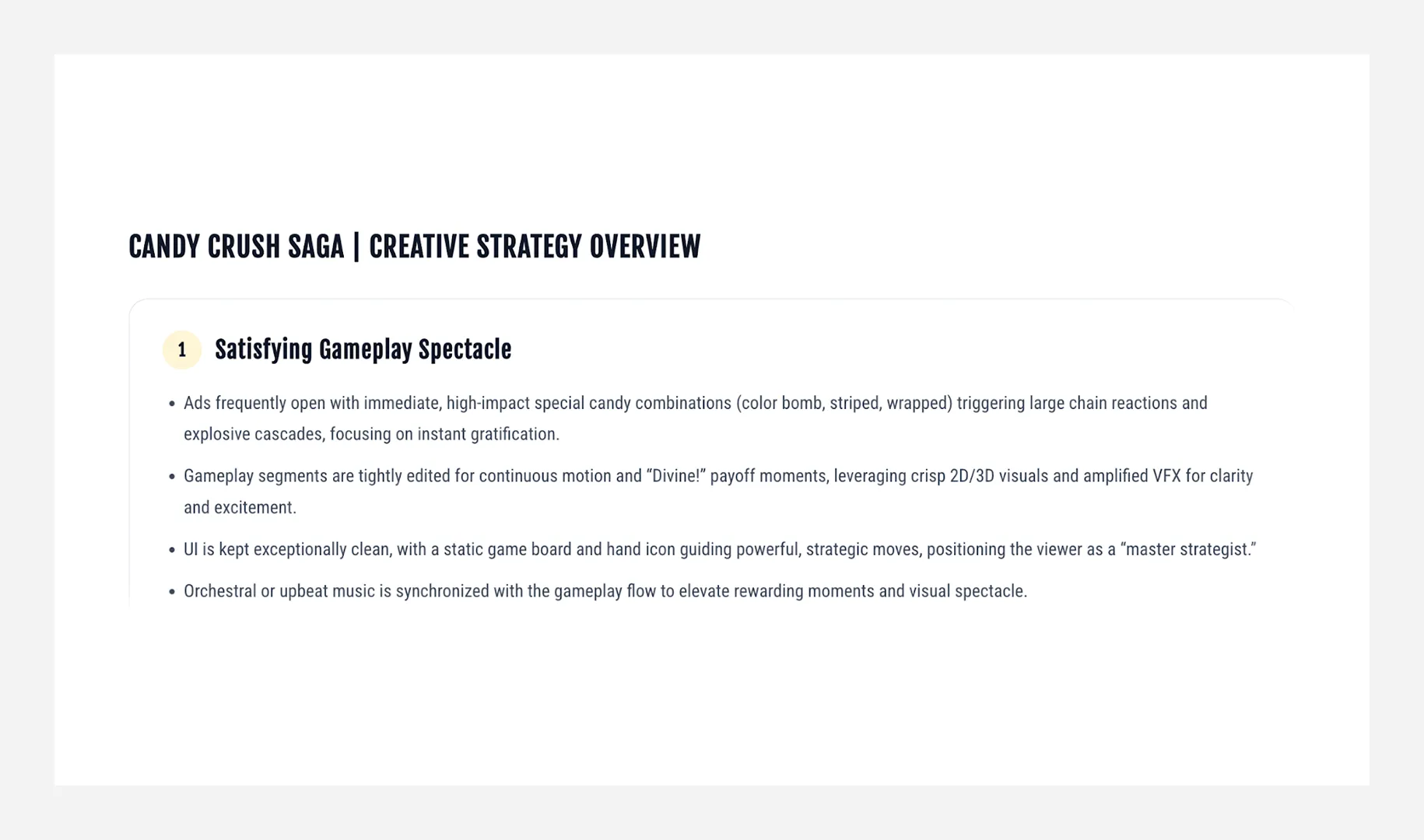
Is it perfect? Nah.
But by skimming this summary, I can immediately tell whether those videos are worth looking at for what I’m working on, and whether they might contain the kind of insight I’m hunting for. And conveniently, all the analyzed videos sit right below the summary, so you can check them yourself.
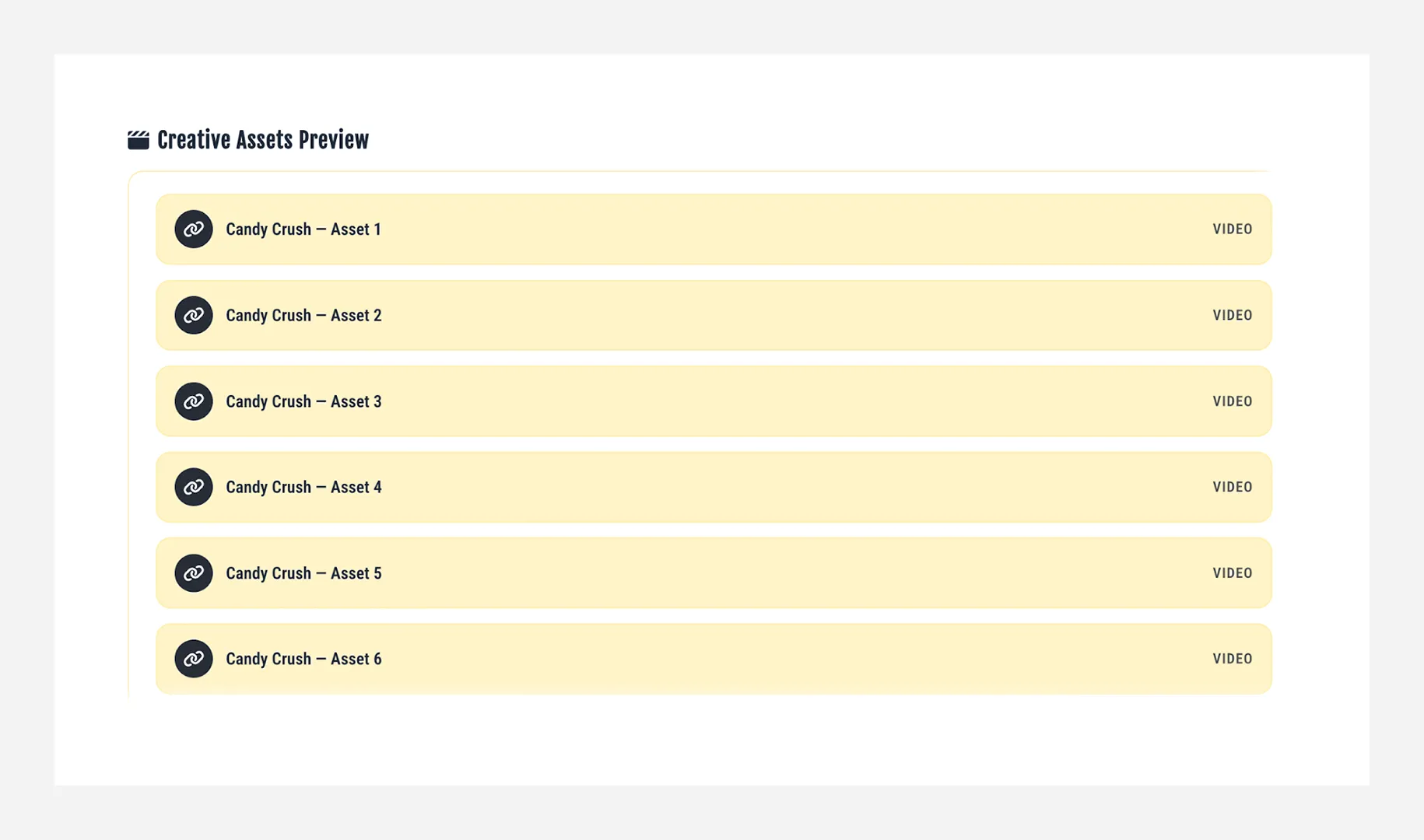
If you want to take it one step further and get an overview of an entire market segment at once, you can.
For example, say you magically forgot everything about the Match-3 market (I know you haven’t – just picking something familiar so you can judge the output yourself).
Let’s take Candy Crush as a client game and compare what they do to other big players. A comparison analysis lets us see:
- which opportunities the whole category relies on
- which approaches are someone’s unique “specialties”
- and which creative pillars brands lean on to build recognition in ads
You won’t ever confuse a Project Makeover ad with a Fishdom ad, even though both are Match-3.
You can easily mistake a Match Villains ad for a Toon Blast ad… but that’s a whole different rabbit hole.
Genre Benchmark
Quadrant Summary
- Fail-Loop Rescue Structure and Puzzle Bait
- Emotionally-Charged Character Transformation or Peril
- TikTok-Native, Meme/UGC & Influencer Collaborations
- Sensory Satisfaction via High-Impact Animated Gameplay

Again, this isn’t something you should blindly believe in. It’s more like what higher education gives you: a sense of where to dig deeper if you actually want to learn more.
8. Fighting my Anger Issues
You’ve heard that creative people are quite sensitive, right? Well, that still doesn’t excuse us from being professional in our communications. But sometimes the feedback you get is SO frustrating you physically cannot get yourself to stand up and change it, because you know it’s better the way you wrote it. But still. You have to.
What helps me is copying the bit that got feedback, adding the feedback itself, and asking GPT to “fix it according to the feedback.”
Do I send that version back to the client? HA! Absolutely not.
Now my anger gets redirected at GPT, because I hate how it rewrote it, and suddenly I feel the urge to show it how it should be done. I redo the edits myself, feel proud again, and then send it back. Silly? Oh hell yes. But it works like a charm.
It’s hard to edit your own magical, beautiful, perfect text… but it’s ridiculously easy to edit a bad GPT version and make it good again.
Final Word
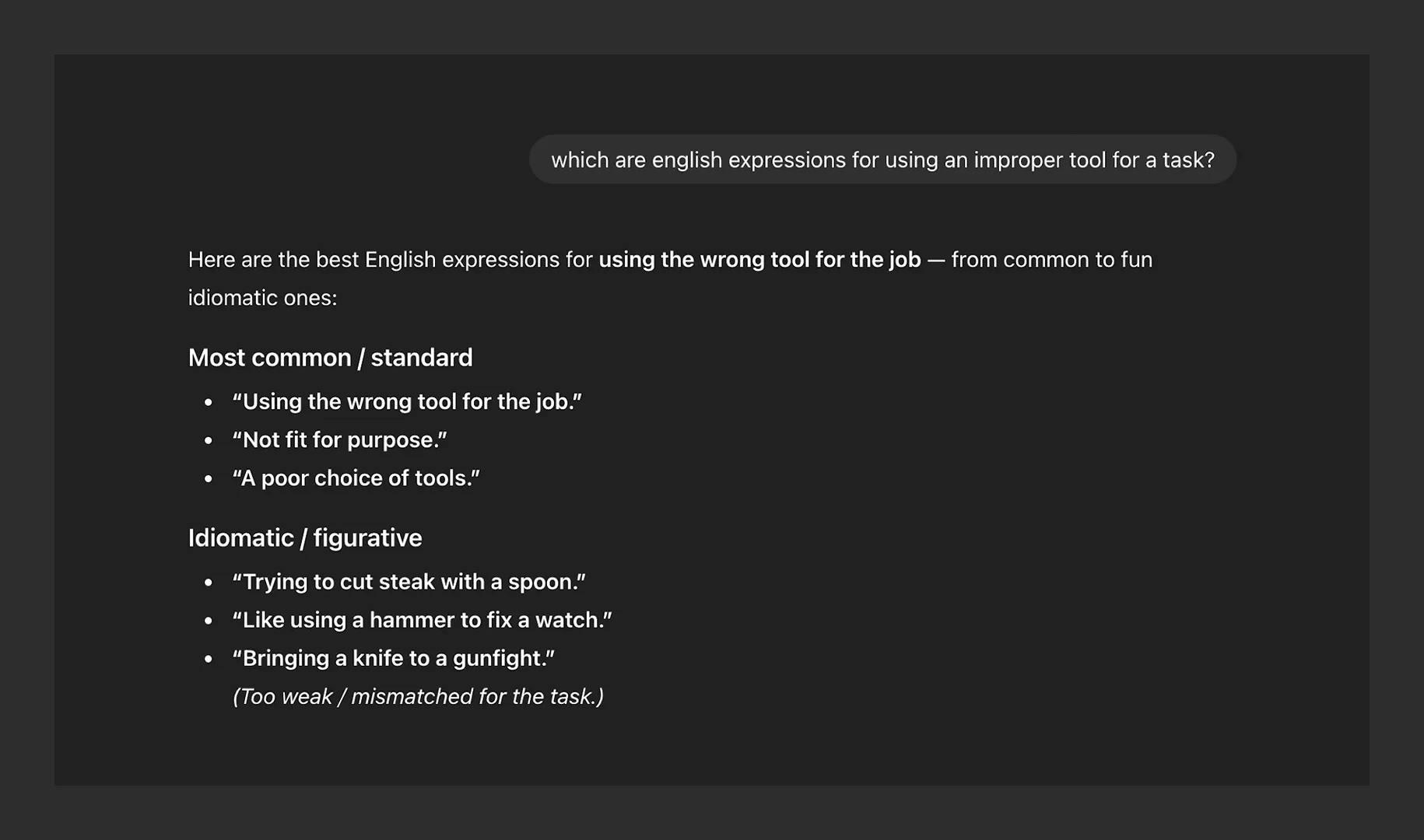
AI’s not your friend, and it’s not your enemy. It’s a tool. Use it as you please, but make sure you’re not trying to use a hammer to fix a watch. Know its limitations, and give it the things you hate doing, not the things you actually enjoy.