If you’ve been to any mobile growth event lately, you’ve heard it: playables.
You need them, you needed them yesterday, but they cost more, take longer, and demand more from your team than standard video creatives.
So, should you invest? And what share of your mix should they actually occupy?
There are many types and use cases. By the end of this article, you’ll have a clear picture of whether playables belong in your growth strategy.
What Are Playable Ads?
Playables are ads you can tap, swipe, and actually play. While true playable ads are built using HTML5, simpler interactive formats exist as well. Most mobile ad formats interrupt the user experience. Playables flip that dynamic: you interact because playing beats staring at a screen for 30 seconds.
Recently, I walked past a Fanta promotional booth and grabbed a free can. It’s not my usual drink, nor something I would have bought myself. But I tried it, liked it, and now maybe I’ll buy one. That’s exactly how playables work: someone who never considered your genre suddenly finds themselves enjoying it mid-ad.
This is the power of “try-before-you-install.” The Interactive Advertising Bureau (IAB) frames it as a single ad unit capable of driving full-funnel results – capturing attention, educating the player, and driving action in one seamless experience. While the format has expanded into fintech and fitness apps, mobile games boast the longest track record of success.
The Main Elements of Playable Ads
Every high-performing playable shares the same three structural components. Each has a distinct job to do.
The Hook (Tutorial Prompt)
The first three seconds decide whether a user engages or scrolls.
Unclear instructions kill most hooks. Because a playable is an interaction lasting less than a minute, there’s no room for a lengthy explainer screen. The user needs to know what to do the moment the ad loads.
The best hooks show rather than explain. Make the interactive elements brighter than the background – a glow, a bounce, or an animation that draws the eye. If a turret needs to rotate, place arrows around it showing which way. The action should be entirely obvious without a single word of text, keeping the user experience frictionless.
The Interactive Gameplay
The gameplay is the core of the playable: a short interactive experience typically lasting 15 to 60 seconds. The goal is to make it genuinely satisfying enough that when it ends, the user wants to keep going. They want to unscrew that last bolt; they want just one more move.
Playable mobile ads can use real game mechanics or simplified variations, but the transition from the ad to the actual game shouldn’t be jarring. If someone installs a game to get “one more move,” only to open the app and find a completely different experience – that’s disappointment, and disappointment uninstalls.
While letting users win ends up in higher conversion rates, a slightly calibrated challenge often outperforms a completely effortless one. The magic usually lives in the sweet spot between “easy” and “medium.”
The End Card and Call-to-Action
The end card closes the experience and converts intent into installs. It typically features brand visuals, recognizable characters, a short tagline reflecting what the user just played, and a single, unmissable call to action like “Install Now” or “Play Free.”
There’s a growing trend toward persistent CTAs visible throughout the entire gameplay experience. In theory, some users are ready to convert mid-ad. In practice, this creates a safe-zone problem: adding an extra static element to a small screen means either the gameplay gets covered or the CTA gets buried.
If your playable is genuinely absorbing, let the player enjoy it and introduce the CTA at the end. If the gameplay isn’t strong enough to hold attention on its own, you’re likely better off using an interactive end card rather than a full playable build anyway.
Types of Playable Ads
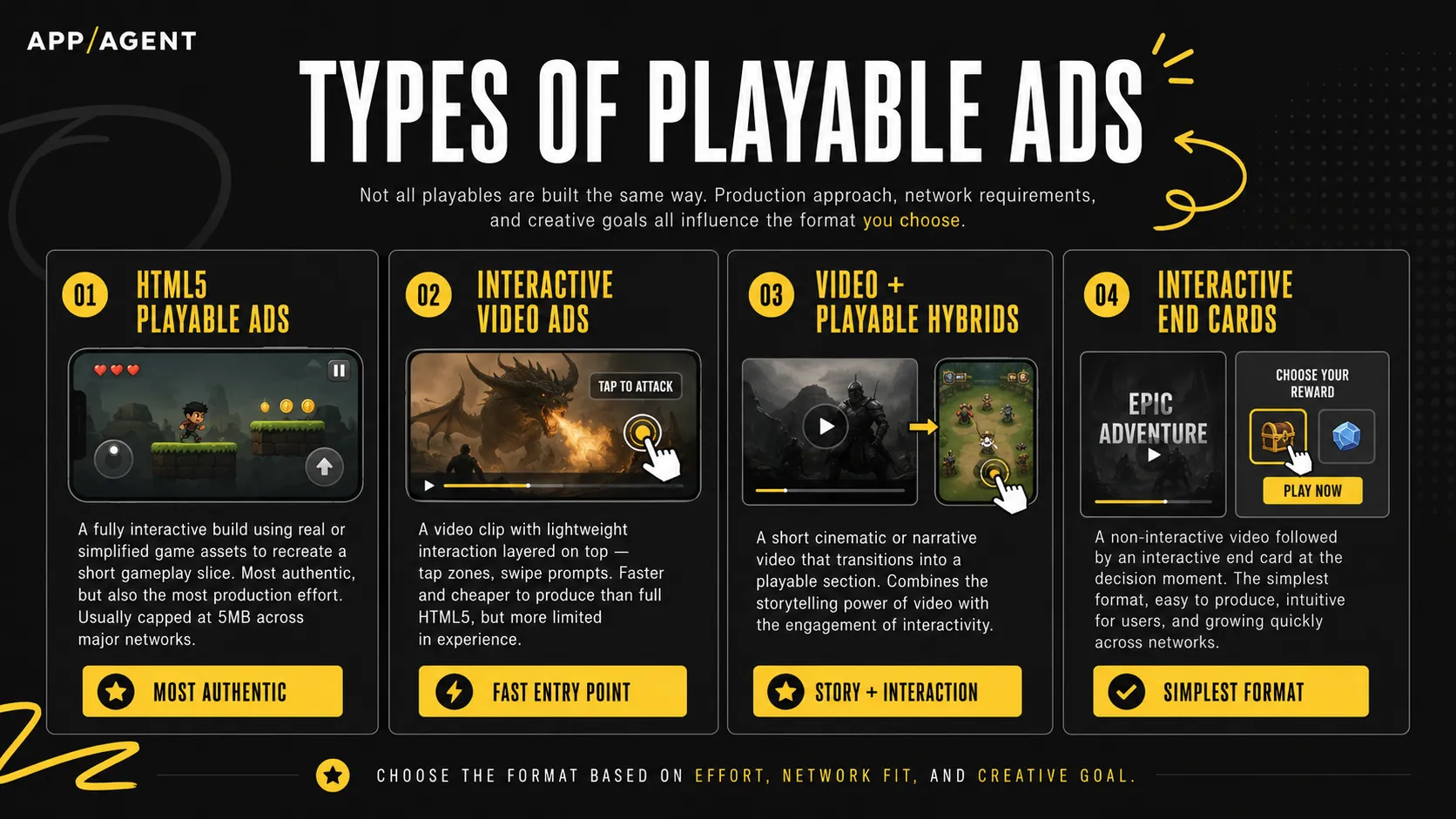
Not all playable ads are built the same way. Production approach, network requirements, and user acquisition goals all influence the format you choose.
HTML5 Playable Ads
This is the industry standard format: a fully interactive build using real or simplified game assets to recreate a short slice of gameplay. It offers the most authentic preview but requires the most production effort. It also demands heavy asset optimization to fit within the 5MB package limit enforced by most ad networks.
Interactive Video Ads
This format features a standard video clip with a lightweight interactive layer on top, such as specific tap zones or swipe prompts. They are quicker and cheaper to produce than full HTML5 playables ads, making them an excellent entry point for teams wanting to test interactivity before committing to full development.
Video + Playable Hybrids
A short cinematic or narrative video that transitions into a playable section. Hybrids are gaining ground among larger publishers because they combine the storytelling power of traditional video with the high engagement of playables. First, you watch a traditional ad with a broken house, and then you finally get a chance to fix it.
Interactive End Cards (IECs)
An IEC pairs a non-interactive video ad with a brief interactive end card that captures the user’s decision moment. As one of the fastest-growing playable variants across major networks, IECs are easy to produce, intuitive for users, and increasingly paired with video campaigns for a seamless flow into the CTA. More on where the format stands today in AppAgent’s state of playable ads.
Examples of Playable Ads in Mobile Games
The easiest way to understand what works is to look at advertisers using playable ads well.
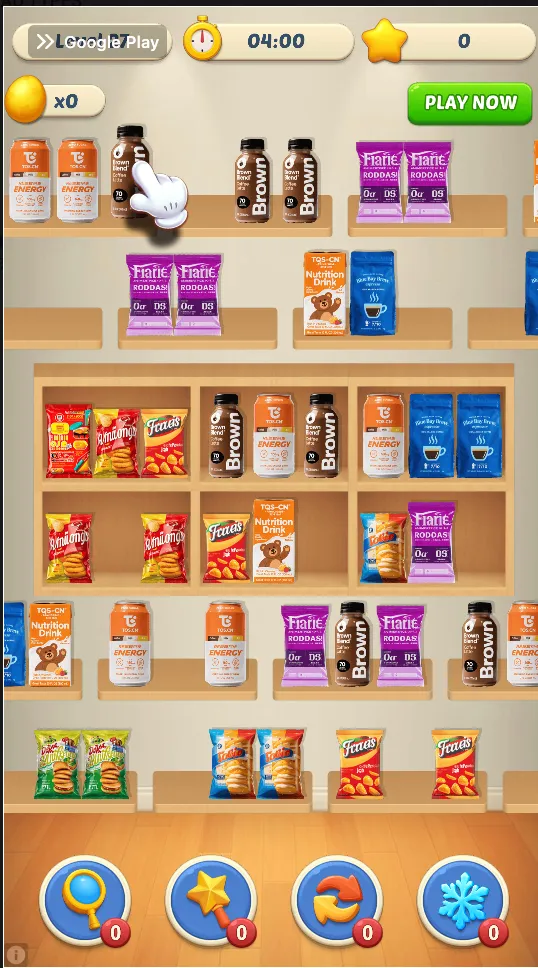
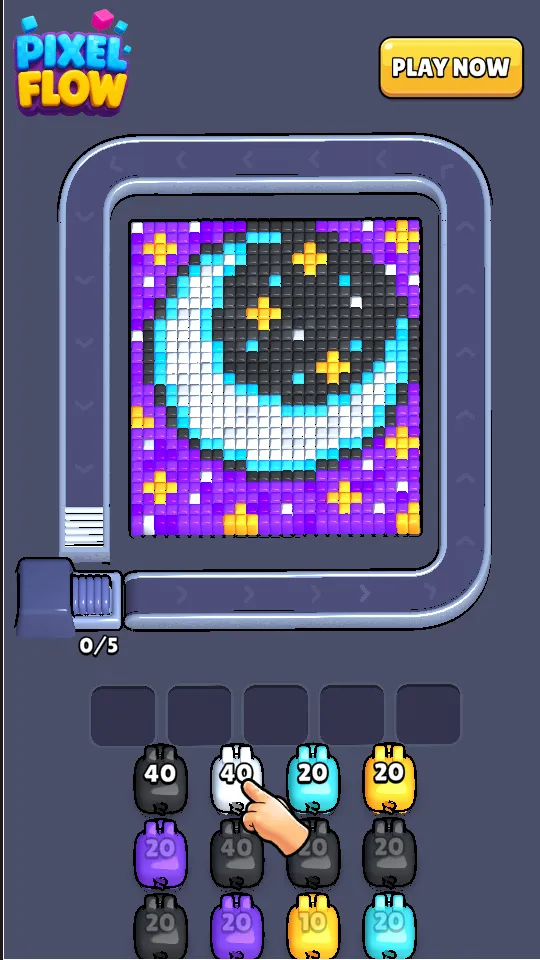
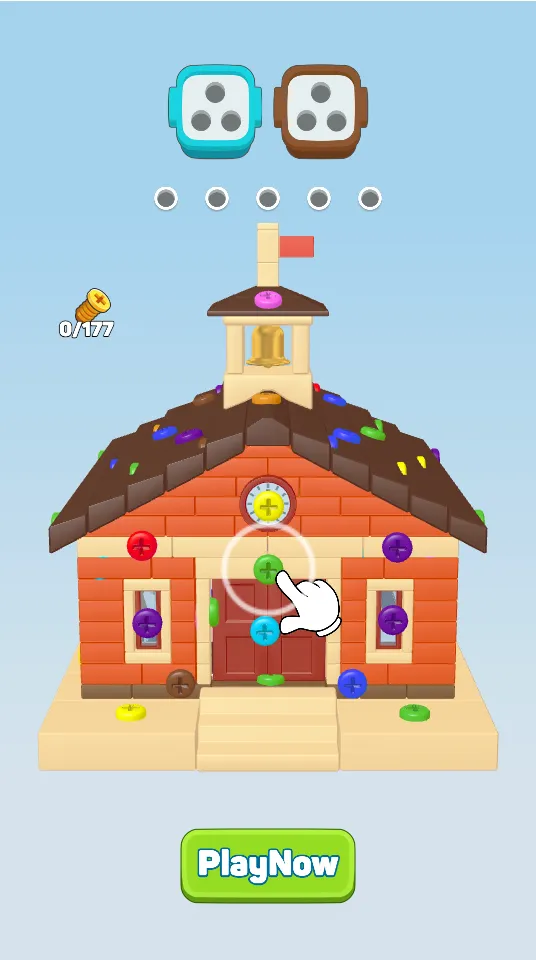
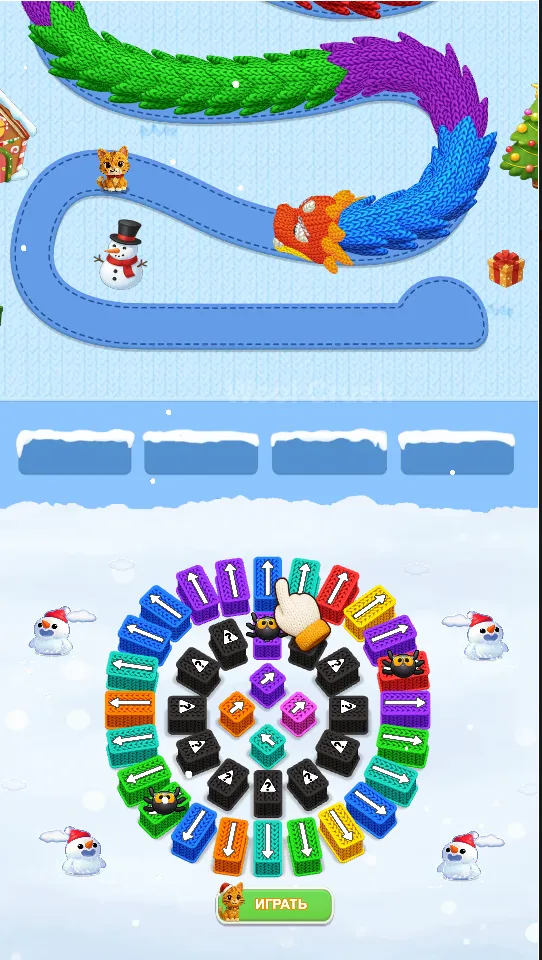
Casual & Sorting Games (Wool Crush, Screw Dom, Pixel Flow): These titles rely on pure gameplay authenticity. Their playables mirror the exact experience of the game – color-matching threads, unscrewing bolts, or organizing shelves. They’re calming, and the satisfaction of watching threads unravel color by color or a shelf organizing itself is hard to explain until you’ve felt it.
Users install these games to unwind, making an authentic micro-gameplay experience the perfect hook. (Guilty as charged: I’m currently on level 394 in Wool Crush, don’t ask how long it took). These work because the playable is the game, just a taste of it.
Emotional Rewards:
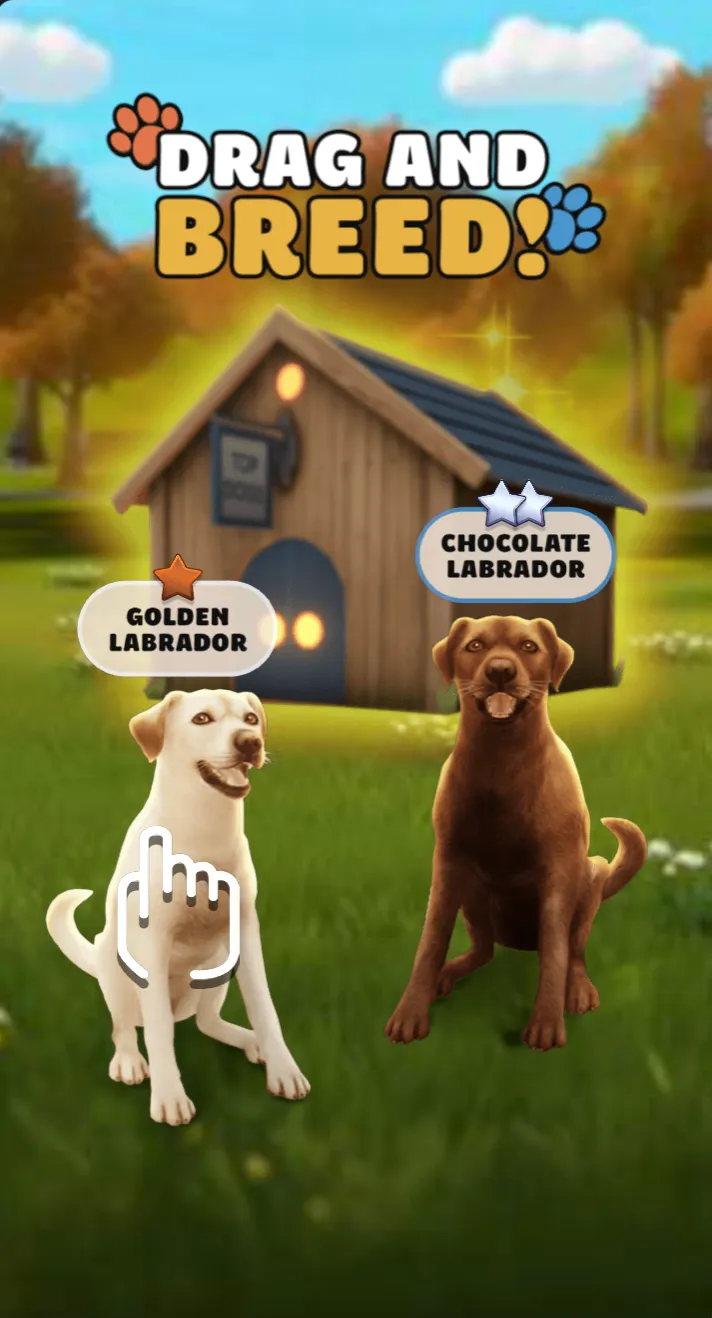
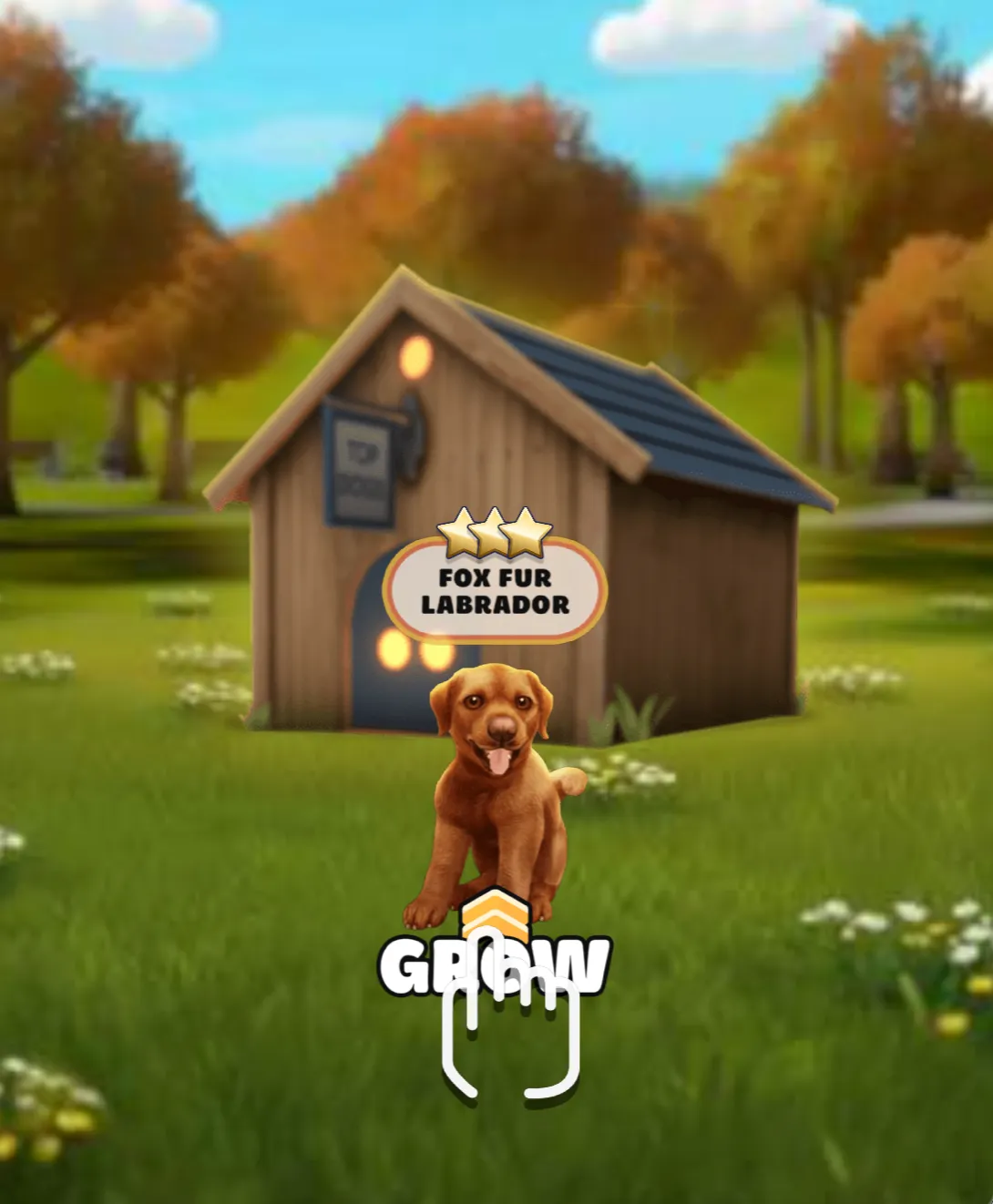
For AppAgent’s work on PocketPaws, we focused on a single mechanic pulled straight from the game: combining dogs to breed a new puppy. The playable delivers immediate emotional satisfaction. The moment a new puppy appears, it visually outshines its parents with star ratings and stat overlays showing its growth. Simple to play, immediately rewarding, and a perfect taste of why people actually stay in the game.
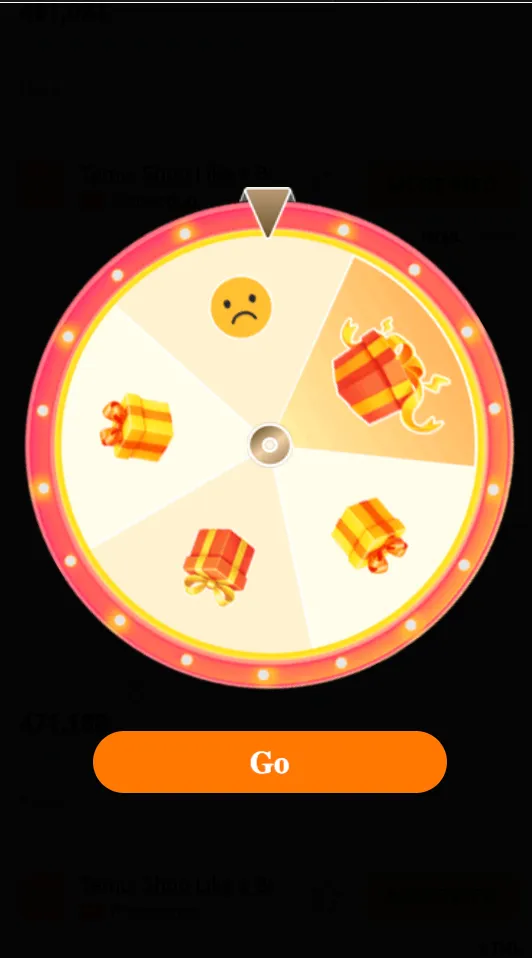
E-Commerce & Gamification (Temu): For a non-gaming example, Temu’s “spin-the-wheel” interactive end card is probably the most recognizable. Rotate the wheel, and reveal a massive discount (you always land on the biggest one). This gamified mechanic worked so well for UA that the publishers eventually integrated the feature directly into the core app experience.
How to Develop Playable Ads for Your Mobile App
Producing playable ads is vastly different from producing standard video production. In reality, it is game development on a micro-scale.
You need assets, yes, but also their animations – because whatever a programmer rigs up won’t look pretty. You will also need far more custom SFX and VFX than a standard video requires. In video, you can pull audio straight from game capture, but here you have to list every single one (like the chime of a collected coin) explicitly. You see the first version and realize you forgot the sound for the coin collected. All the small things add up. Think like a game developer, not a creative producer.

In-House Production vs. External Partners
External partners typically deliver one playable for $3,000–$8,000, depending on complexity, with a 2-4 week turnaround. The rule of thumb: if you are producing fewer than 3-4 playables a month, go external. Once you scale to 5+ builds per month, it starts making sense to build in-house. And if you do go external, sign an NDA.
These days, new AI-playable makers are popping up as low-cost alternatives. It comes with trade-offs, but it can be a good way to quickly explore what works and then double down on proven concepts with human experts and designers.
Production Timelines and Costs
Final cost depends on how complex the gameplay is, how polished the art needs to be, how many languages you’re localizing for, and how many networks you’re exporting to. Going cheap rarely pays off, and not in an abstract way.
A broken ad unit that shows users a black screen still costs money to produce and money to distribute. The user gets their in-game reward anyway, but you don’t get the user. Spend more, test thoroughly across every network you plan to run on, to at least give it a chance to scale.
Typical production timelines for mobile game playable ads today are:
- Human-made traditionally: 3-7 working days for rather simpler and 1-3 weeks for more complex playable ad
- Using AI-assisted workflows/templates: 1-3 days
- Ultra-fast prototyping with AI tools: in hours
The caveat of using AI tools is that you often need to fix UX issues, performance, and bugs, which is not always straightforward.
That’s why many top teams now use AI for “find winning direction quickly” and humans for “make it polished, stable, and scalable.”
Technical Requirements and Network Specs
Most networks enforce a 5MB size cap, each has its own export specs, and you’ll need analytics integrated to track where users drop off. Here’s a quick reference for the six networks that carry most playable inventory:
| Network | Max File Size | Format | MRAID | Specs |
|---|---|---|---|---|
| Meta | 5 MB | Single HTML file, all assets inline | Not required (uses FbPlayableAd API) | Portrait, responsive, no external requests |
| Google Ads | 5 MB | Single HTML file | MRAID 2.0 | No XHR, portrait + landscape |
| AppLovin | 5 MB | Single HTML file | MRAID 2.0 | No external resources, audio muted until first interaction |
| Unity Ads | 5 MB | Single HTML file, all assets inlined | MRAID 3.0 | Portrait + landscape, no XHR, Android 4.4+ / iOS 9.0+ |
| Mintegral | 5 MB | ZIP file (assets + HTML named identically) | MRAID 2.0 | Requires custom GameEnded API call on top of store click API |
| Moloco | 5 MB | Single HTML file | Uses FbPlayableAd API | Portrait + landscape, audio off by default |
Before anything goes live, test and optimize across all target networks with at least three pairs of eyes. It’s much easier to catch issues before launch than after.
Best Practices for Creating Playable Ads
Great playables are built on creative decisions that compound over time. Master these core principles to lift the performance of every campaign you run.
Hook the User in the First Three Seconds
If you lose users before they interact with the ad, nothing else matters. Make your interactive elements visually pop, keep instructions obvious, and deliver instant haptic or visual feedback the moment they tap the screen. Save brand logos and narrative setups for the end card.
Match the Feel, Not Just the Game
Using the right assets and core mechanics isn’t enough if the playable fails to deliver the same emotional experience as the actual game.
For example, Empires & Puzzles successfully runs character dress-up playables. While this seems like an odd choice for a hardcore strategy RPG, it works beautifully because it taps into the exact same emotional driver of growing your team and empowering characters. Conversely, you can build a shooter playable with perfect assets, but if the gunplay feels sluggish or unengaging, your ad performance will exit the chat.
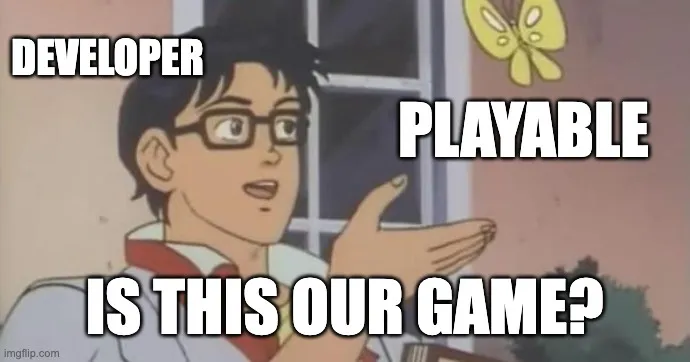
Matching the feel is the hard part. Your creative strategy for a mobile game should define that feel clearly because it derives from the genre and the game’s core design intent.. If unsure, custdev with real users will tell you faster than any internal debate.
Keep It Simple, but Make It Rewarding
The gameplay should be intuitive enough that anyone can succeed within seconds, but engaging enough that they want to keep going. Let users experience clear progression, but don’t make it entirely frictionless. A slight challenge creates the cognitive itch that drives a user to click “Install” to finish what they started.
Stay On-Brand and Visually Consistent
Branding inside a playable doesn’t mean plastering your logo across the screen. It means matching the exact art direction, color palette, and UI tone of the live game. Users who install via a playable enter your app with concrete expectations; visual consistency between the ad and the game drastically reduces first-session churn.
Optimizing Your Playable Ads with Testing and Iteration
Every interactive ad in production should serve as a data source to inform your next build. For a deeper breakdown of how to interpret creative results, see AppAgent’s guide to reading mobile ad creative performance data.
Metrics that matter:
- Completion rate – what share of users finish the playable
- Time to engage – how quickly they tap after the ad loads
- Dropout point – where exactly users churn (this tells you more than anything else)
- Day 7 ROAS and retention correlation – do users who played longer actually stick around?
How to test:
- On Meta, test in tier-4 countries using IPM before rolling winners into tier-1 AEO campaigns.
- On AppLovin and AdMob, use native A/B testing tools.
- Always test one variable at a time – hook, gameplay difficulty, end card, win/loss state.
The same principle applies when you iterate mobile ad creatives: each new version should isolate one creative learning.
Managing Ad Fatigue
On high-volume networks like Meta, playables typically experience creative fatigue within 7–14 days. To scale actively, you should maintain a rotating library of asset variants and aim to produce 3–6 new playables per month.
That said, every once in a while, you’ll find the one. The enjoyable ad experience that just keeps performing, weeks, months, sometimes years, and you’ll have no idea why. When that happens, GamePlan™ can help you figure it out and test and iterate on it.
Scale Your Playable Ad Production with AppAgent
AppAgent is a mobile gaming only growth and creative agency supporting 150+ mobile games for publishers including Supercell, Netflix Games, Scopely, Plarium, and Metacore.
On the playables side, here’s what we bring:
- GamePlan™ – a strategic diagnostic that identifies where playables fit in your broader UA mix and what to do when you find your forever-performer
- Creative Program – ideation, production, localization, and testing of playables across formats
- Creative strategy canvas – a systematic way to generate new playable concepts based on player motivators
- IPM-based testing frameworks across Meta, AppLovin, AdMob, Google Ads, TikTok, and Apple Search Ads
For DreamLoft’s Game of Words, our creative strategy canvas delivered a 33% creative win rate and a 65% revenue increase in four months.
If you’re trying to figure out whether playables belong in your mix, or why your current ones aren’t scaling, we can help. Let’s talk.
Playable Ads FAQs
In 2026, a professionally produced playable ad usually costs around $3,000–$8,000 when built by an external partner. The final cost depends on gameplay complexity, asset quality, animation, SFX, VFX, localization, number of supported ad networks, and QA requirements. Simpler interactive end cards or AI-assisted prototypes can be cheaper, but a polished HTML5 playable usually requires creative production, development, network-specific exports, testing, and technical QA.
A simple playable can take several working days, while more complex playable ads can take one to three weeks or longer. External partners often work on a 2–4 week turnaround, depending on complexity and feedback cycles. AI-assisted workflows can speed up early prototyping to 1–3 days, or even hours for rough concepts, but the final playable still needs UX review, file-size optimization, bug fixing, performance checks, and network compatibility testing.
Mobile game studios producing fewer than 3–4 playables per month should usually use an external partner; studios producing 5+ builds per month can start considering in-house production. Playable ads are closer to micro game development than standard video production. They require gameplay logic, creative assets, animations, SFX, VFX, development, QA, and network-specific exports. External partners make sense for lower volume or specialized builds. In-house production starts making sense when a studio has enough monthly volume, creative resources, development support, and technical QA capacity.
AI playable ad tools are useful for fast prototyping, but most production-ready playable ads still need human creative direction, polish, and QA. AI tools can help teams explore concepts quickly, test rough mechanics, and find promising creative directions faster. The trade-off is that AI-generated playables often need fixes for UX, performance, bugs, visual quality, brand consistency, and network requirements. A practical workflow is to use AI to find winning directions, then rely on human experts to make the final playable stable, polished, and scalable.
Most mobile game studios should test an interactive end card or interactive video before investing in a full HTML5 playable, unless the game has a simple core mechanic that can be understood and enjoyed in seconds. Interactive end cards are faster and cheaper to produce, making them a good first step into playable-style advertising. Interactive video can also validate whether users respond to taps, swipes, or simple choices. Full HTML5 playables make the most sense when the game’s core loop is easy to preview, visually satisfying, and close enough to the real gameplay experience.
To scale actively, mobile game studios should aim to produce roughly 3–6 new playable ads per month. On high-volume networks like Meta, playable ads can experience creative fatigue within 7–14 days. Studios should maintain a rotating library of concepts, hooks, asset variants, difficulty levels, end cards, and win/loss states. The goal is not just to produce more playables, but to keep testing new creative angles before current winners stop scaling.