Cheap installs are the most expensive thing you can buy.
That sounds backwards, so let me explain. Most teams judge their mobile game marketing by cost per install, drive that number down, watch the dashboard turn green, and relax. Then the cohort they bought churns by Day 7, spends nothing, and the math quietly collapses. The install was never the win. It was the entry ticket to a much longer game.
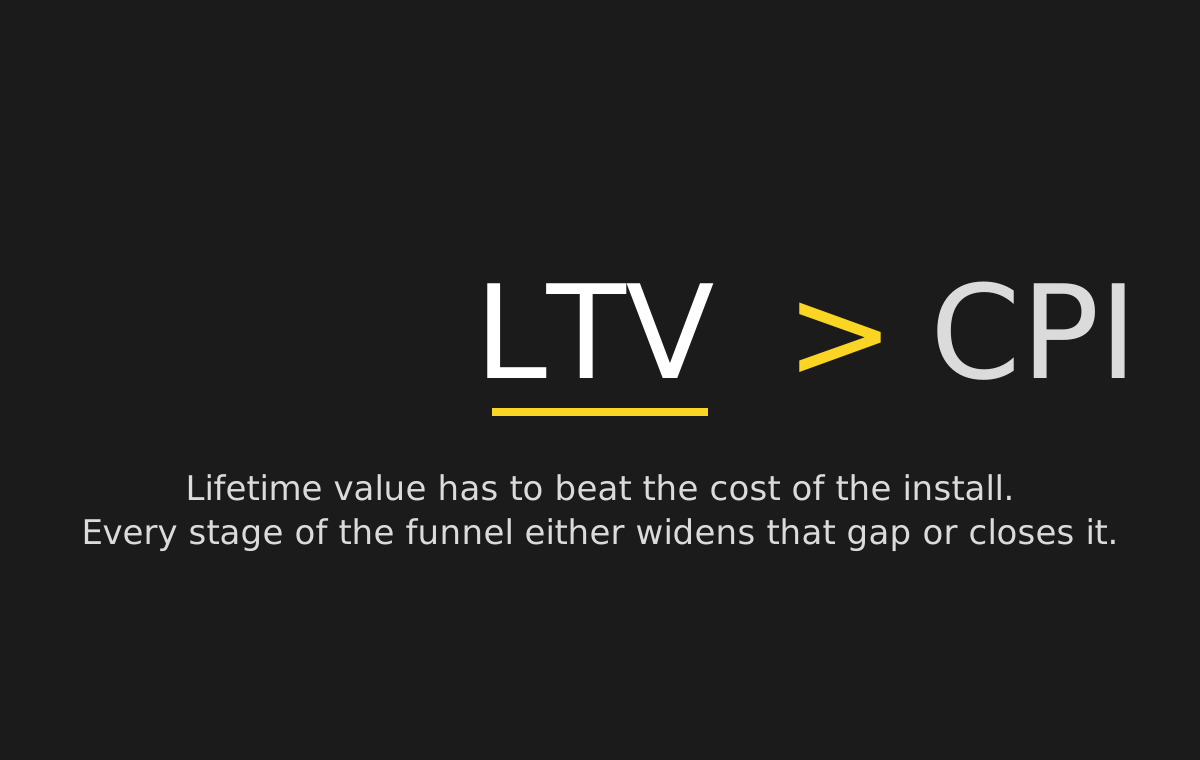
Run the business properly and one inequality decides everything: lifetime value has to beat cost per install. ROAS, the metric every studio lives and dies by, is just LTV divided by CPI. Every stage of the mobile game marketing funnel either widens that gap or closes it. This guide walks the full funnel through that lens, the one we use at AppAgent to build growth and performance marketing strategies for studios from soft launch to Top Grossing.
What Is a Mobile Game Marketing Funnel?
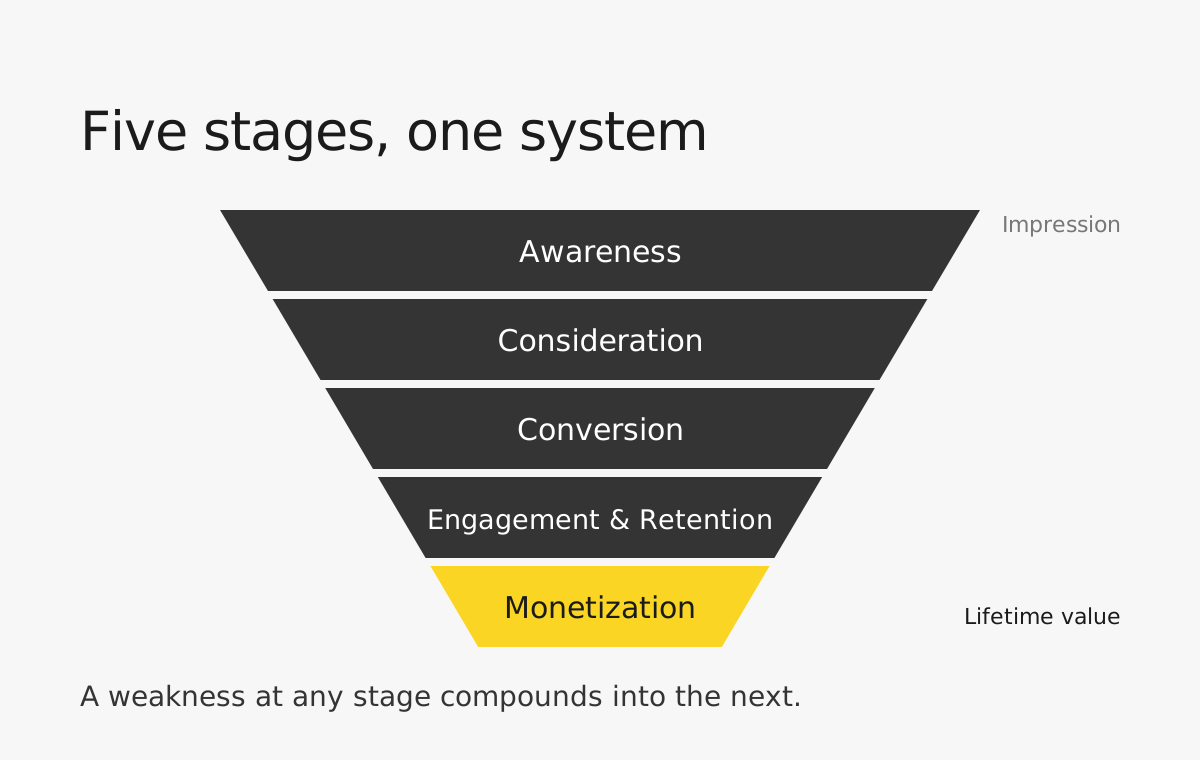
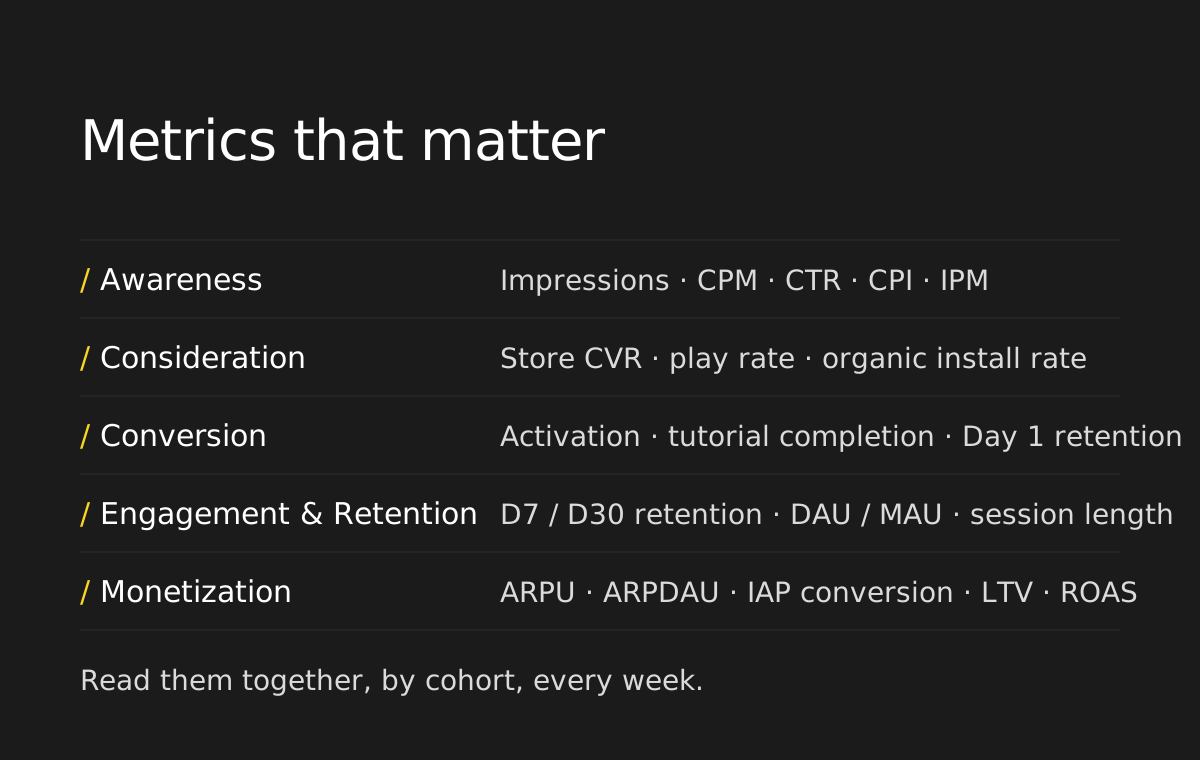
A mobile game marketing funnel is the structured journey a player takes from first seeing an ad to becoming a long-term, paying user, typically across five stages: awareness, consideration, conversion, engagement and retention, and monetization.
Why does it matter more for mobile games than for most mobile apps? Because games live or die on habit, and a model that stops at the download tells you almost nothing. Generic mobile app marketing can stop at the install. In the mobile gaming industry, the marketing funnel cannot. It shows you where players leak out, what your real acquisition costs are across channels, and whether the revenue per user will ever clear the price you paid to acquire them.
Here is the mindset shift the rest of this article is built on. You control LTV far more than you control CPI. Your game genre and the auction set a floor on CPI that no user acquisition manager can fully escape. But retention, monetization, and the game design behind them sit inside your own team. Optimize only the top of the funnel and you buy volume. Optimize the whole user funnel and you buy value that compounds.
The 5 Stages of the Mobile Game Marketing Funnel
Treat growth as one connected funnel. Each stage has its own job, its own metrics, and its own strategies and tactics. Creative, UA, and ASO at the top decide who arrives, and retention and monetization at the bottom decide whether they were worth acquiring. A weakness at any stage of the funnel compounds into the next, so fix the leaky bucket before you pour in more ad spend.
1. Awareness: Capturing Attention at the Top of the Funnel
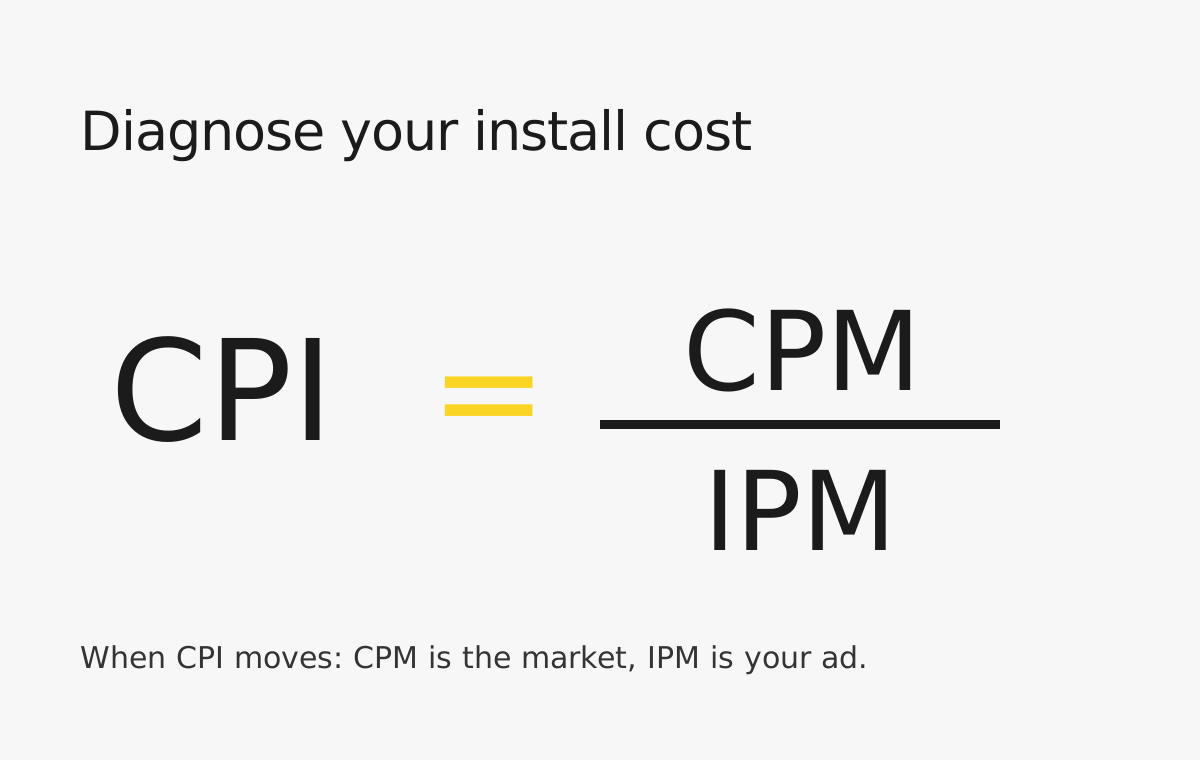
This is where your audience meets the game for the first time, almost always through paid user acquisition on Meta, Google App Campaigns, TikTok, and AppLovin. The numbers to watch are impressions, CPM, CTR, CPI, and IPM. A useful way to read the top of the funnel: CPI equals CPM divided by IPM, so when your install cost moves, you can tell whether it was the market (CPM) or your ad creative (IPM) that shifted.
In the post-ATT world, you do your targeting with the creative. The format, the copy, and the content decide which players you attract, which means that in mobile marketing creative is the single biggest lever on both CPI and the quality of the users you bring in. Attention-grabbing creative is how Magic Tavern scaled Project Makeover past 100M downloads, and how trend-aware concepts like Capybara Go turned a viral character into cheap, scalable installs. Test rough ideas on small budgets with short video ads, find a winner that spends consistently at a healthy ROAS, then iterate inside that winning formula with more formats such as playable ads before it fatigues.
One more thing that separates game marketers who scale from those who stall: campaign type. CPI campaigns deliver cheap installs and terrible players. ROAS, or value-optimized, campaigns cost more per install and bring users who actually retain and pay. We see studios chase CPI campaigns to hit DAU vanity targets during UA audits inside our GamePlan™, and it is almost always the wrong call. Each campaign should pay its own bill.
A special category is campaigns aimed at re-engaging lapsed players, where the focus is on highlighting what’s new in the game since they stopped playing. Several DSPs and ad networks, such as Remerge and Smadex, specialize in retargeting these audiences.
2. Consideration: Winning the App Store Page
Every install you ever get, paid or organic, passes through the store page. That makes app store optimization one of the highest-leverage stages of the funnel, and it works on two things: visibility and conversion rate.
Both app stores give you native A/B testing, and for new games it pays off fast. Even with limited traffic, testing app icons, screenshots, and your store listing can move CPI and organic install rates meaningfully.
- For established titles the brand constrains what you can test, so you win with sharp hypotheses instead of random tweaks.
- For Clash Royale we tested three distinct hypotheses about why players would convert, and the RPG-led variant won.
- For Star Stable Online we lifted US iOS conversion 54% and moved the game from 4th to 1st for “horse games,” which then pulled in more organic traffic on its own.
ASO is not only a CPI lever, it shapes LTV too. Google Play lets you optimize a store test toward retained first-time installers rather than raw installers, and that is the metric we point clients at if the are looking for effective tactics for growth. Attract engaged users who stay, not just people who tap install and never open the app again.
3. Conversion: From Install to Activated Player
The most decisive moment in the entire funnel is the first session. A user who installs and never completes onboarding is worth nothing, so this is where activation either happens or the money you spent up top evaporates. Track activation rate, tutorial completion, and Day 1 retention, and watch cost per activated user rather than cost per install.
Google’s own research is blunt about why: the first five to ten minutes make or break Day 2 retention. So your first-time user experience has to land the core loop fast, give players an early win, and strip friction out of your onboarding flows before asking for anything. A powerful trick here is closing the gap between your ads and your gameplay. Cosmic Lounge’s data shared at PGC Helsinki showed that running a minigame in your ads and building that same minigame inside the game cut cost per retained user by 24% and up to 50%, because the promise in the ad matched the first thing new players actually did.
You validate all of this before you scale, in a soft launch. When we supported the fitness game Walking Planet in soft launch, we ran more than 1,000 in-game surveys and 20 one-to-one interviews, clustered the players by motivation, and aimed the messaging at the broadest segment. The retuned creatives came in at half the CPI of earlier tests, with higher retention behind them. That is the funnel working as one system.
4. Engagement & Retention: Where Mobile Games Win or Lose
Retention is the most important word in this article. It is where games become profitable, and it is interdependent with LTV: higher retention lifts the lifetime over which a player can be monetized. A simple framing we borrow from Reforge holds up well in practice: retention equals activation plus engagement plus resurrection.
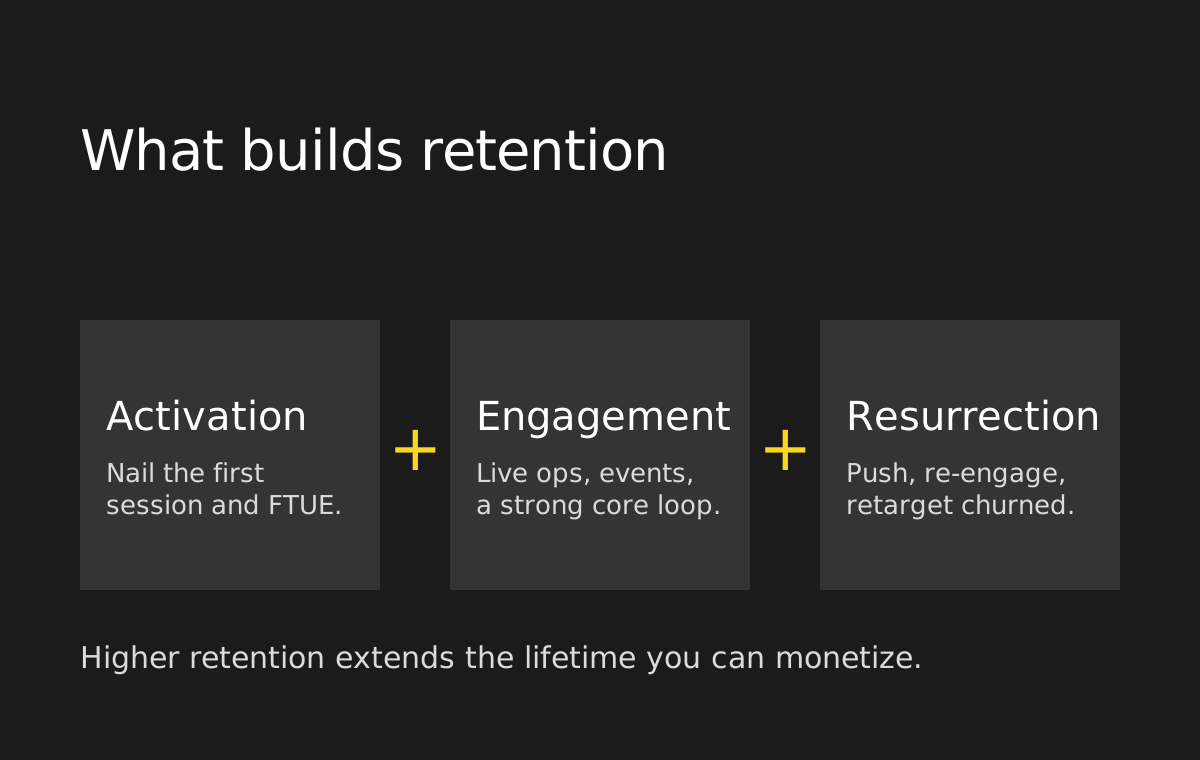
Activation you handle in onboarding. Engagement you earn with live ops, which is now non-negotiable in competitive subgenres like Puzzle-Match3 where CPIs are brutal. Seasonal events, fresh content, and limited-time challenges keep players engaged across weeks and months.
Strong live ops is how Gossip Harbor overtook the very game that inspired it. Resurrection is the third piece: push notifications and well-timed re-engagement bring back churned users, and retargeting campaigns are worth the extra cost for IAP-heavy games, especially around moments like the Christmas holidays when players drift to new titles.
Do not leave virality for later. Royal Match wired social features into its FTUE early, inviting players to gift lives and compete in team tournaments, and that referral loop both raises retention and lowers your blended cost per install. As benchmarks, above roughly 40% Day 1, 20% D7, and 10% D30 retention you have strong retention and are in healthy territory, though the bar varies by game genre and region.
5. Monetization: Turning Engagement into Revenue and LTV
Monetization and retention live in balance. LTV is, simplified, lifetime multiplied by ARPDAU, the average revenue per user taken daily, so you grow it by extending how long players stay and by lifting what each one spends while they are there. Retention comes first. Even hypercasual games with aggressive ads need minimum retention before they can scale with paid UA.
Strong monetization strategies grow revenue per user four ways: improve conversion rate, raise the value of existing payers, maximize ad revenue, and add new streams. Fewer than 5% of players make an in-app purchase, so the 95% you do not monetize are the opportunity.
Even Supercell is now testing optional ads in Brawl Stars. Test your entry offer hard, since the first IAP usually happens in the first days after install, and personalize it by player behavior.
For rewarded ads and other in-app advertising, optimize your mediation and, on iOS, your ATT opt-in rate, because the eCPM gap between opted-in and opted-out users is large. Subscriptions and offerwalls can add new revenue on top.
One discipline above all: every monetization change has to be checked against retention on longer cohorts. “Too many ads” and “pay to win” are among the top reasons players quit. If an ARPDAU uplift quietly kills retention, you have made the funnel worse, not better. Model the long-term impact before you ship to 100%.
Key Metrics to Track Across the Full Funnel
ROAS is the headline, but it hides as much as it reveals.
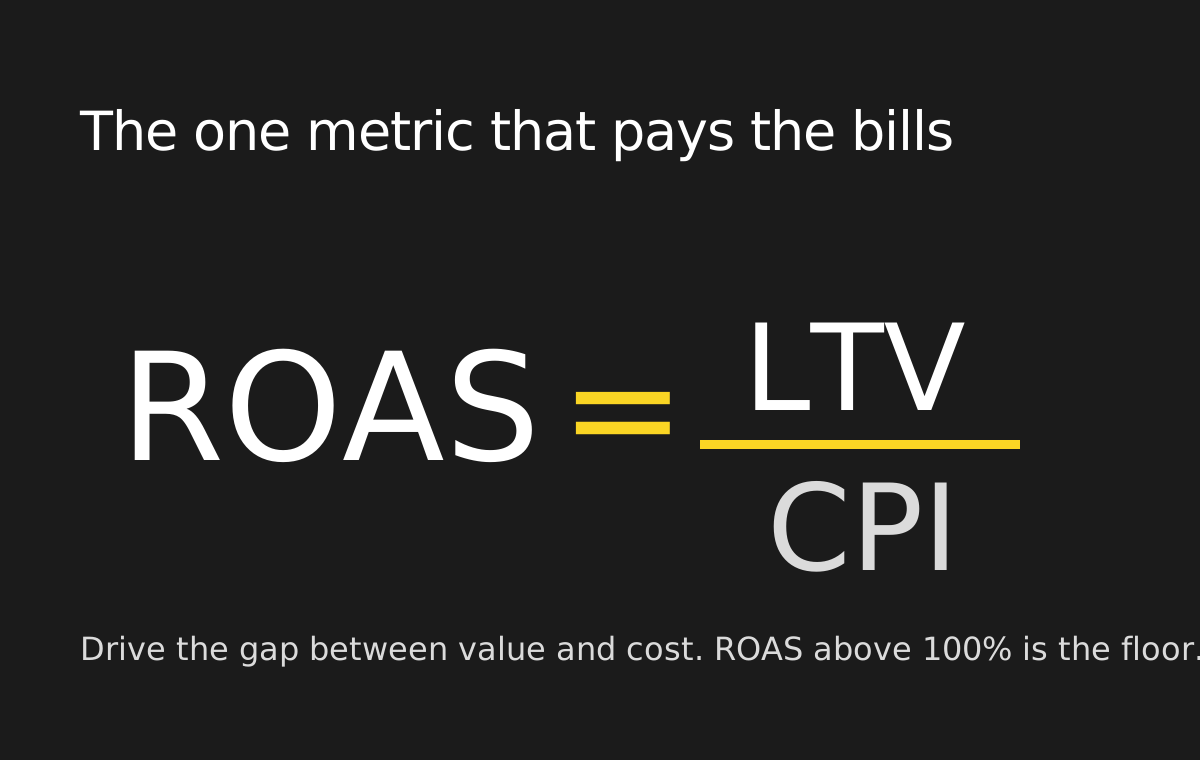
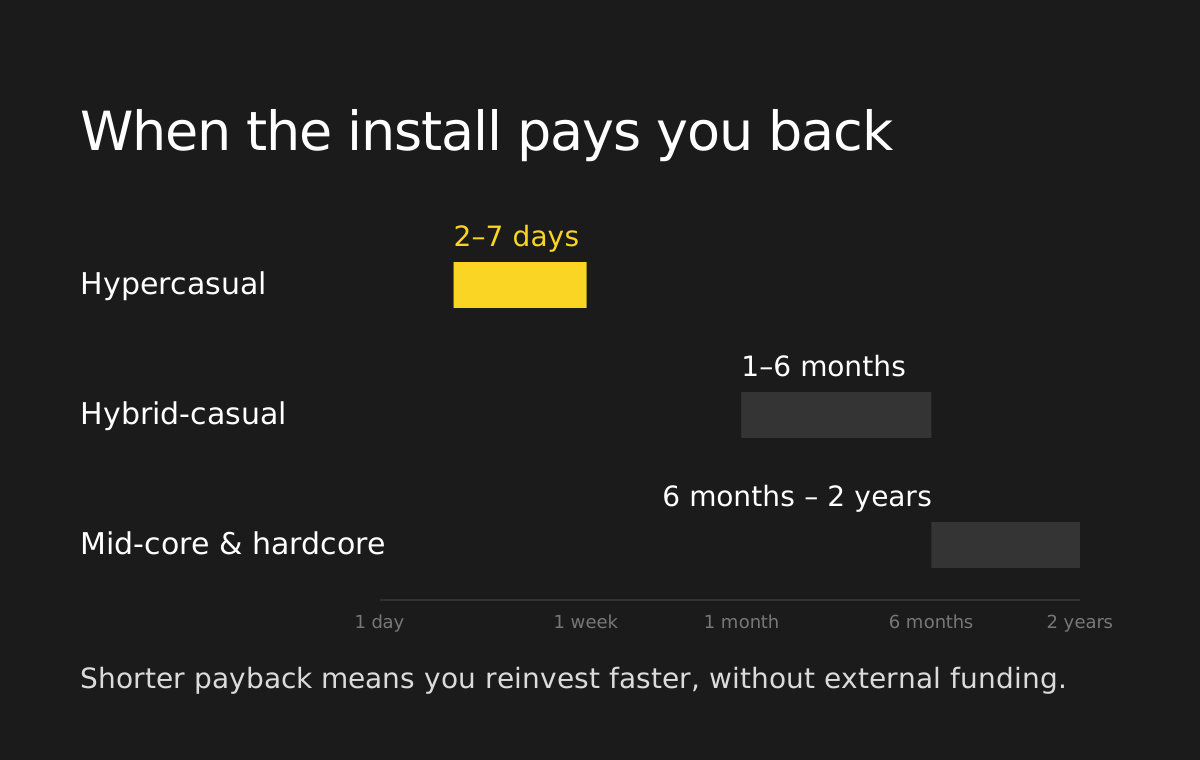
The first rule is to always speak of LTV at Day X, never as a single number, and to know your payback time, the day LTV finally crosses CPI. Hypercasual recoups in days, hybrid-casual in one to six months, mid-core and hardcore in six months to two years. Shorter payback lets you reinvest without burning external funding, so the steeper your LTV curve, the healthier your cash flow.
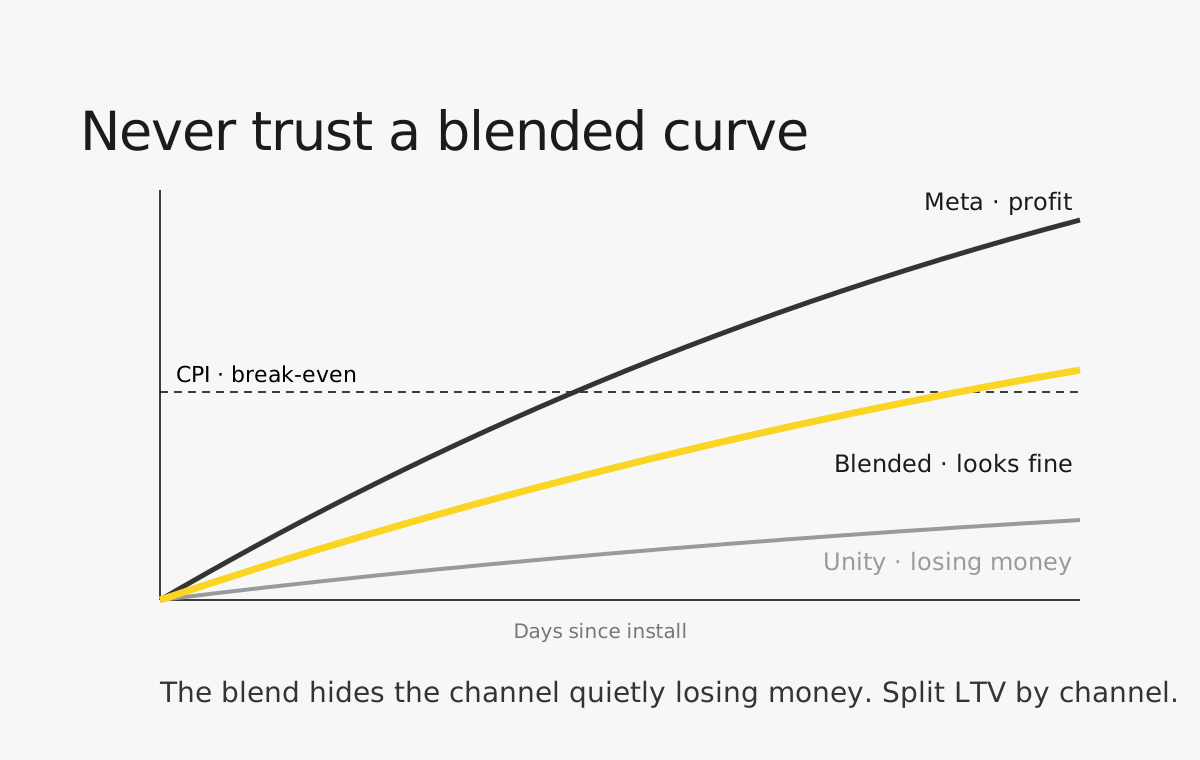
The second rule is that a blended LTV curve is a trap. We once watched a studio lose money on Unity Ads while their blended numbers looked fine; it only showed up when we split LTV by channel. Player behavior varies by source, OS, GEO, and even device model, since high-end phones carry higher spending power. Read your conversion and retention numbers across channels and by cohort, every week.
| Stage of the funnel | Key metrics | What it tells you |
|---|---|---|
| Awareness | Impressions, CPM, IPM, CPI | Creative quality and UA efficiency |
| Consideration | Store conversion rate, organic install rates | App store listing strength |
| Conversion | Activation, tutorial completion, Day 1 retention | Onboarding and traffic quality |
| Engagement & Retention | D7/D30 retention, DAU/MAU | Habit and stickiness |
| Monetization | ARPU, ARPDAU, IAP conversion, LTV, ROAS | Revenue efficiency and payback |
This is what data-driven marketing actually means in mobile gaming: owning your data in your own database, building LTV curves across dimensions, and refining the model as new players and app updates arrive. The MMP rarely shows you enough on its own.
Planning Your Mobile Game Marketing Plan Around the Full Lifecycle
The funnel is not only a post-launch tool. A real mobile game marketing plan maps it onto the full lifecycle of the game, and each phase hands the funnel a different job.
Before launch, the work is validation, not promotion. Market research syncs you with real demand, helps game developers build detailed gamer personas around motivations and game genre rather than demographics, and informs both game design (LTV) and messaging (CPI).
A marketability test takes that further, using small paid marketing campaigns to check whether a theme, character, or IP can attract users cheaply. We ran exactly this for Innogames on Sunrise Village, testing “crime and mystery” against “love and romance” against “magic and sci-fi” before a cent of real budget was committed.
A soft launch in stable markets is the dress rehearsal. Validate Day 1 and D7 retention, tutorial completion, and early engagement and monetization before you scale, because this data decides whether the game is ready at all.
At global launch everything fires together: paid UA, creative velocity, referral programs, and ASO pulling in one direction. After launch the center of gravity drops to live ops, re-engagement, app updates, and monetization, with LTV signals feeding back into how the next round of ad spend gets allocated. That feedback loop is how we kept Game of Words profitable on paid UA for more than three years.
Best Practices to Optimize Your Mobile Game Marketing Funnel
A handful of principles separate the studios that scale from the ones that stall.
Think ahead and own your economics. Strategy, data, and business economics are the enablers underneath everything else. Set UA budgets to maximize margin, not volume, and treat payback time as a board-level number.
Fix the leaky bucket before you scale. More spend on a funnel that leaks just makes the leak more expensive. A retention problem is often really an onboarding problem, and a monetization problem often starts in the FTUE. Diagnose first, which is the entire point of a 360-degree audit.
Win on creative, and run ROAS campaigns. Creative is the biggest performance lever and it fatigues in weeks, so build a steady testing cadence and match the ad to the channel. Then let value-optimized campaigns, not cheap CPI campaigns, decide where budget goes.
Put retention first and test monetization carefully. Retention is the topic to master before any other, and every monetization change has to be weighed against its effect on longer cohorts.
Do not leave virality for later. Bake referral and social loops into the game design, or validate them with a small MVP, rather than pushing them down the roadmap forever.
Build a Full-Funnel Growth System with AppAgent
Everything above argues one thing: the funnel is a single connected machine, so it makes little sense to hand its parts to disconnected UA, ASO, and creative vendors who never talk to each other.
AppAgent was built the other way. We work with one type of client, mobile gaming studios, and our creative and growth teams sit under one roof and operate as one unit. That structure is how the LTV > CPI framework actually gets executed instead of just admired.
It starts with GamePlan™, our diagnostic that audits UA, ASO, data, creative, FTUE, and monetization to find which stage of the funnel to fix first and hand you a prioritized roadmap.
From there, our Growth, Creative, and Revenue Programs run that roadmap in focused sprints, the same way we have delivered winning creatives for Supercell for more than five years and supported 150+ mobile games for publishers including Netflix Games, Square Enix, Microsoft, and Scopely.
The proof is in the compounding. For Pocket Paws with Landmark Games, one connected engagement lifted ROAS roughly 45% while scaling UA spend about 3x, cut CPI 45% as Meta budgets grew 4.5x, and grew organic installs 8x to reach number one for “dog games.” That is the difference between buying installs and building a business.
If you want your funnel diagnosed end to end before you scale another dollar, let’s talk.